



Industrial machine vision for demanding inspection tasks
Machine vision solutions from a systems integrator – when off-the-shelf solutions aren’t enough
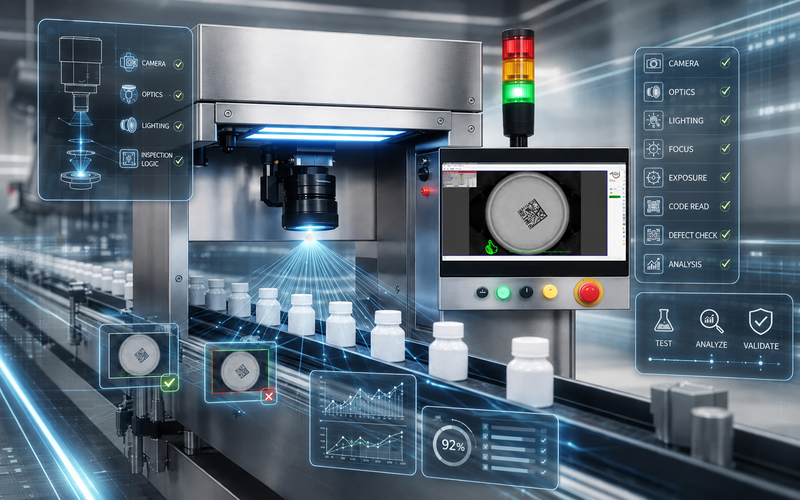
Machine vision makes quality visible – directly within the production process, in an automated and repeatable manner. It detects defects, checks features, reads codes, measures components and reliably documents inspection results during operation.
OCTUM develops and integrates machine vision systems for industrial inspection tasks. As a system integrator, we take into account not only the camera, optics, lighting and software, but also machine integration, interfaces, user interface design, data connectivity and long-term serviceability.
This results in image processing solutions that are tailored to the inspection task, the product, the equipment and the actual production conditions.

Any questions?
Get directly in touch with our
experts on +49 7062 91494-0
or write to us using our contact form
Experienced in industrial image processing
OCTUM has been developing machine vision systems for demanding production environments since 1996. Our solutions are used worldwide – wherever products, components, packaging or codes need to be reliably inspected in-line.
![[Translate to Englisch:] Piktogramm eigene Softwarelösungen](/fileadmin/_processed_/b/3/csm_eigene_softwarel%C3%B6sungen1_7bfc17c94e.png)

What is industrial image processing?
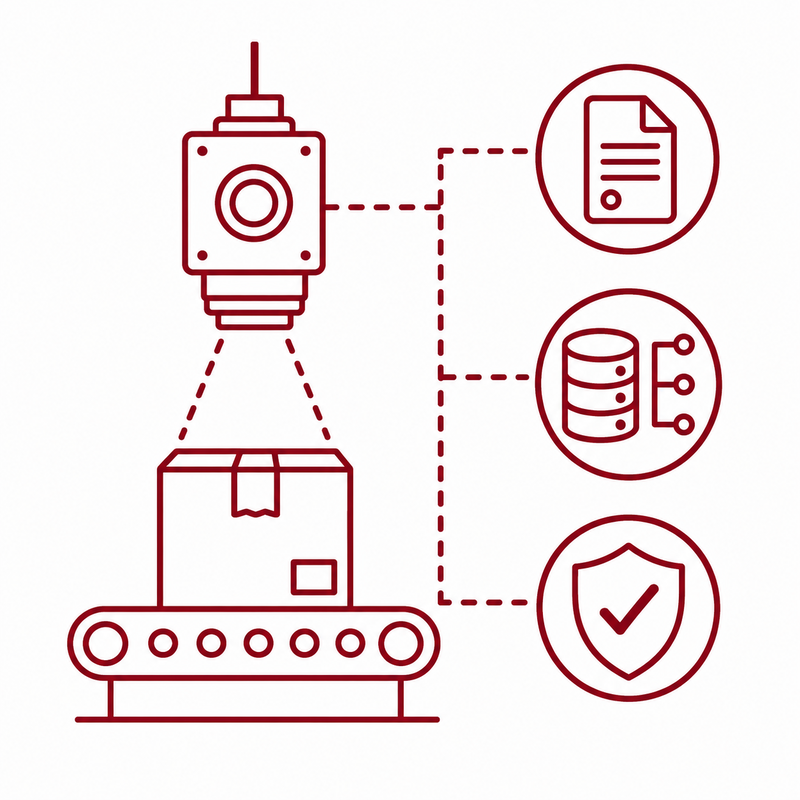
Industrial image processing, also known as machine vision, uses cameras, optics, lighting and software to automatically inspect products, components or packaging. The systems capture images directly during the production process and evaluate them against defined criteria.
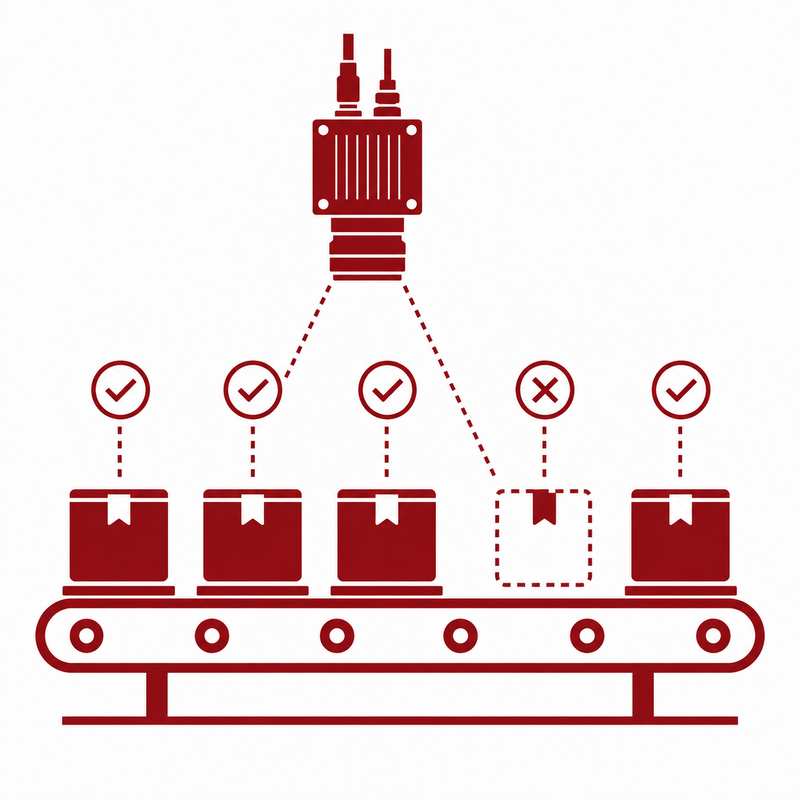
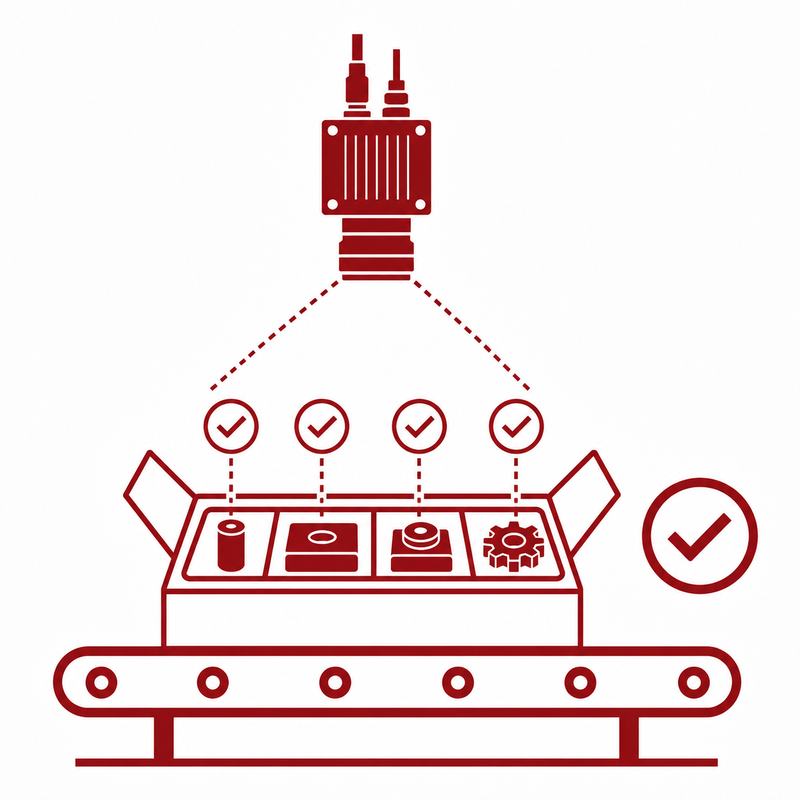
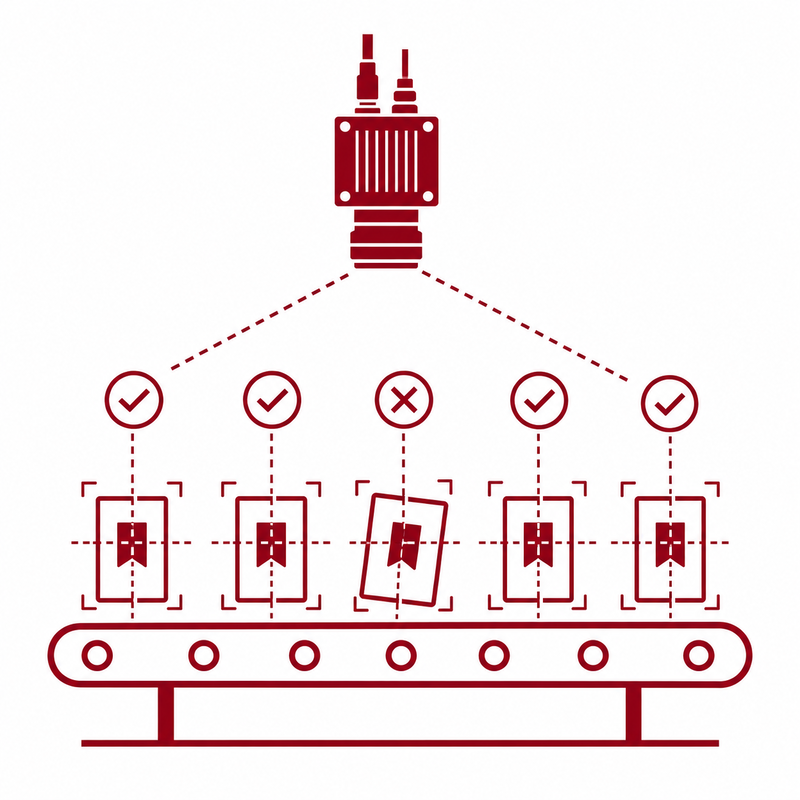
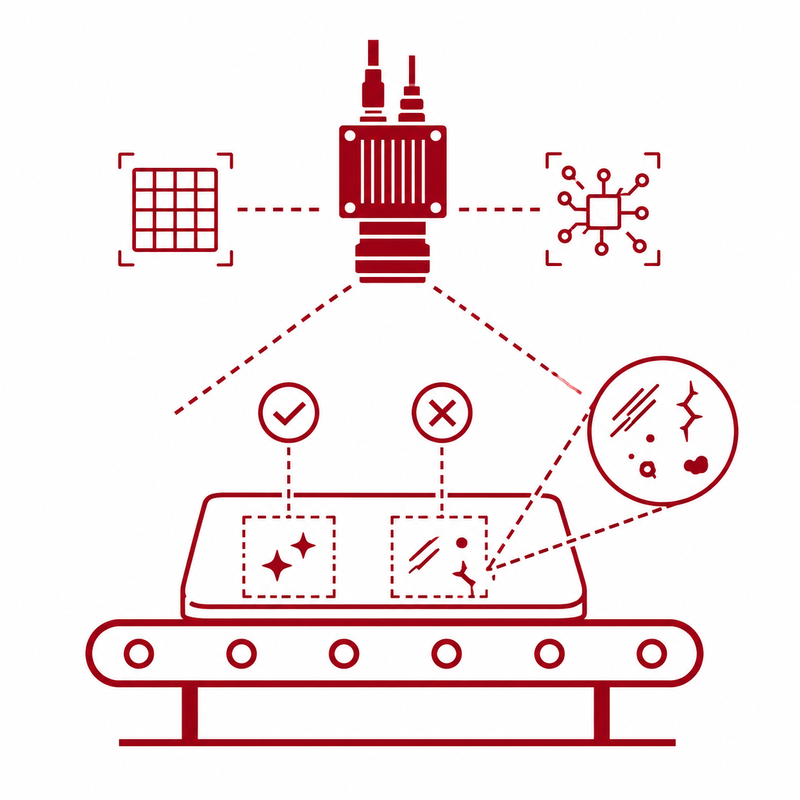
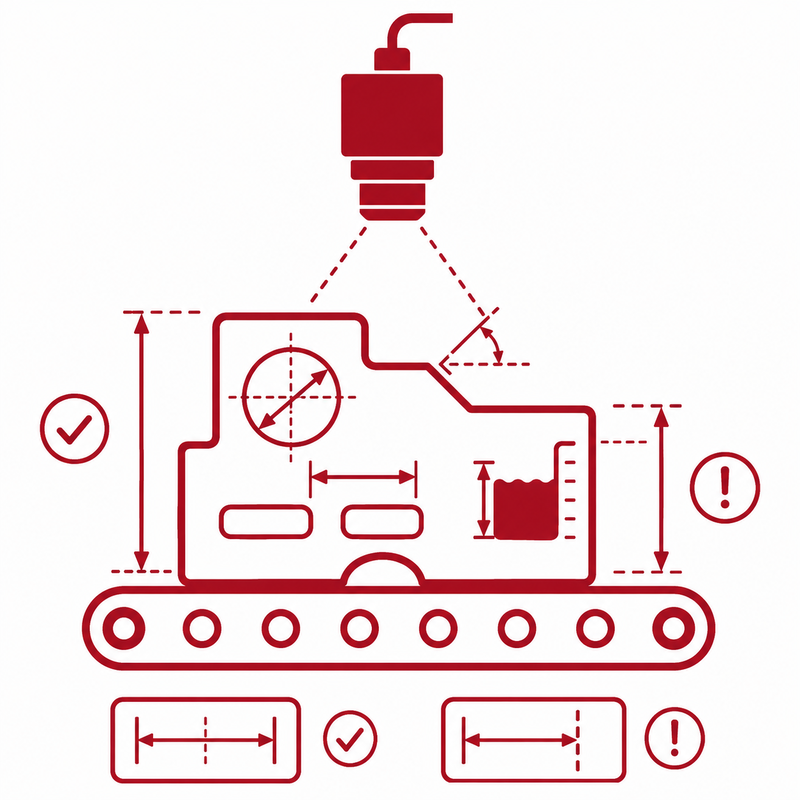
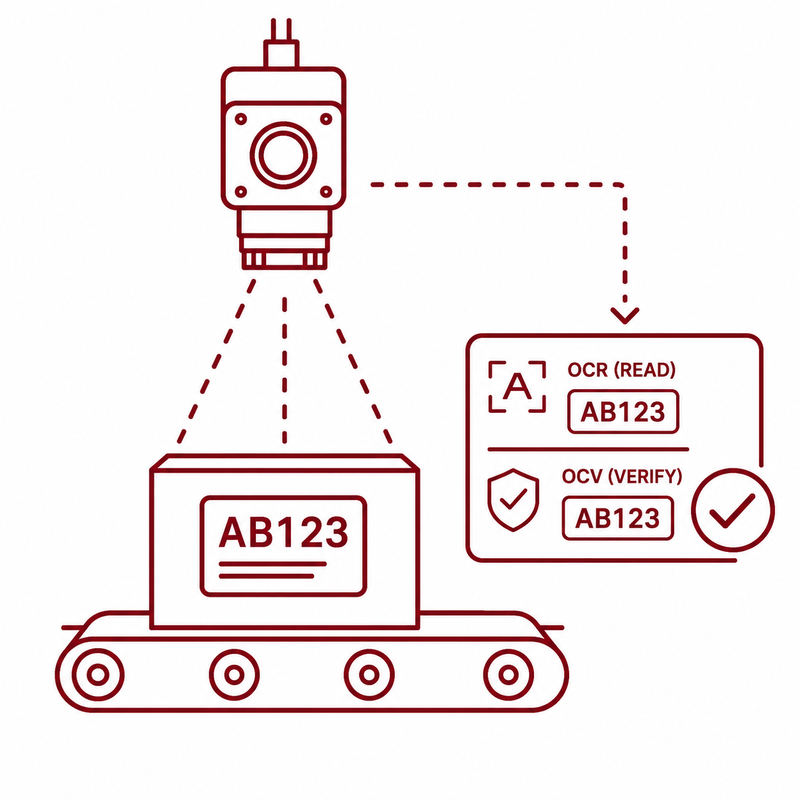
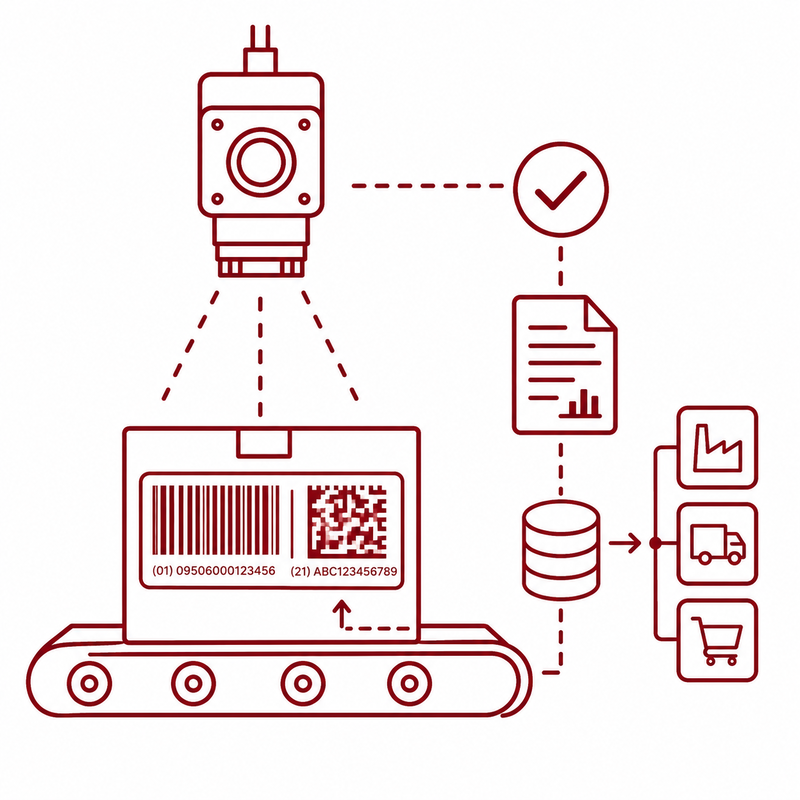
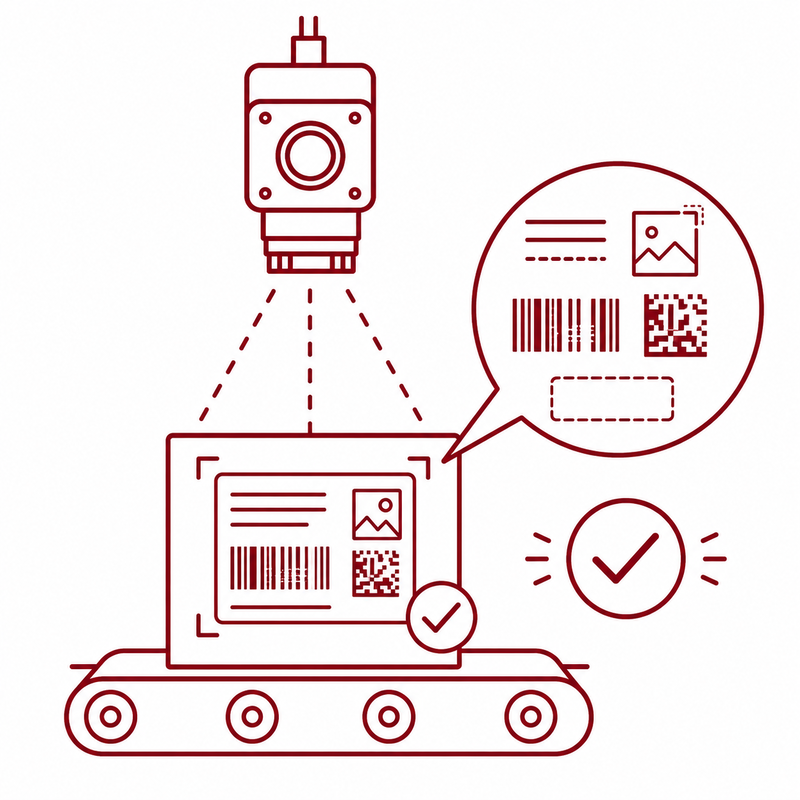
Typical tasks include detecting defects, checking for presence and completeness, verifying orientation and position, measuring features, and reading and verifying codes or plain text.
Compared to manual visual inspection, industrial image processing is objective, repeatable and provides a documented record. This makes it particularly suitable for production processes with high quality standards, short cycle times or end-to-end traceability.
Industrial image processing and AOI
Industrial image processing forms the basis of many AOI systems. AOI stands for automatic optical inspection and refers to the automated inspection of products, assemblies, packaging or surfaces using optical methods.
AOI systems check directly on the production line whether defined quality criteria are met. Defective products can be detected, rejected or documented before they proceed to the next stage of the process.
OCTUM develops AOI systems for a range of inspection tasks – from simple presence checks to complex 100% in-line inspections involving multiple cameras, lighting systems, software modules and interfaces to the production environment.
Typical inspection tasks in industrial image processing
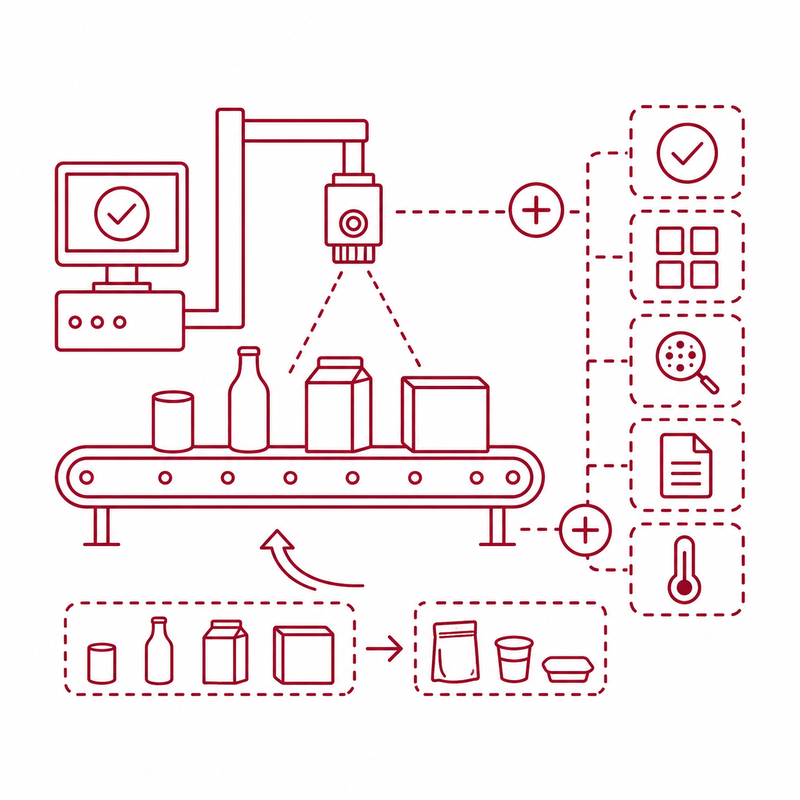
Industrial image processing can be used for a wide variety of tasks. It is essential to consider the product, the defect pattern, the cycle time, the installation environment and the quality requirements as a whole.
Adaptation and expansion of existing inspection systems
When new products, formats or variants are processed on a line, or additional inspection criteria are introduced, existing machine vision solutions can be expanded and adapted. This includes new features, defect patterns, documentation requirements or changes to process conditions.
The right technology for your inspection task
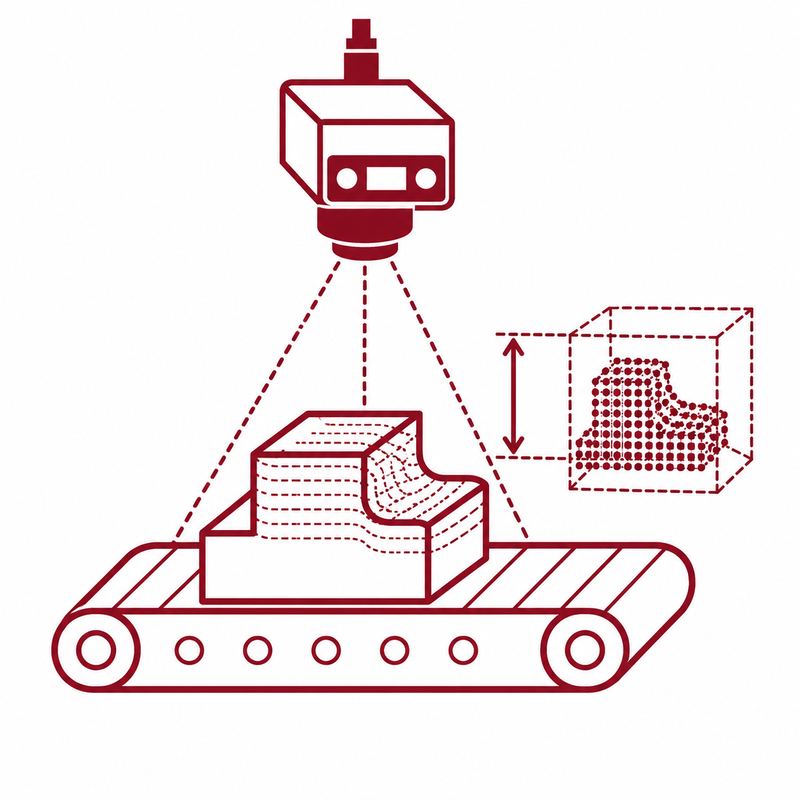
Not every inspection task can be reliably solved using the same technology. That is why OCTUM combines different methods and components to create a suitable comprehensive solution.
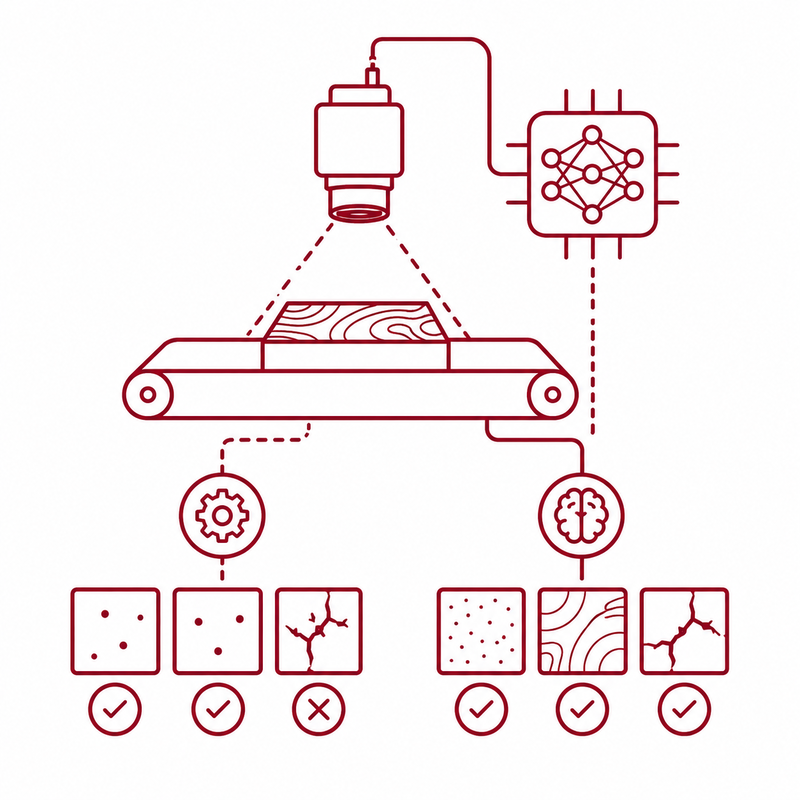
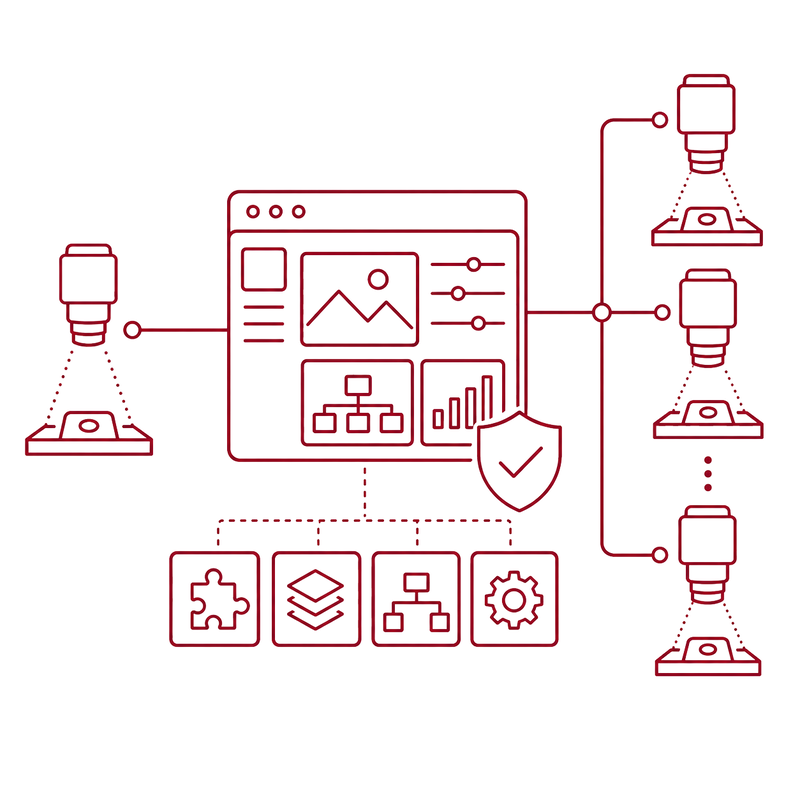
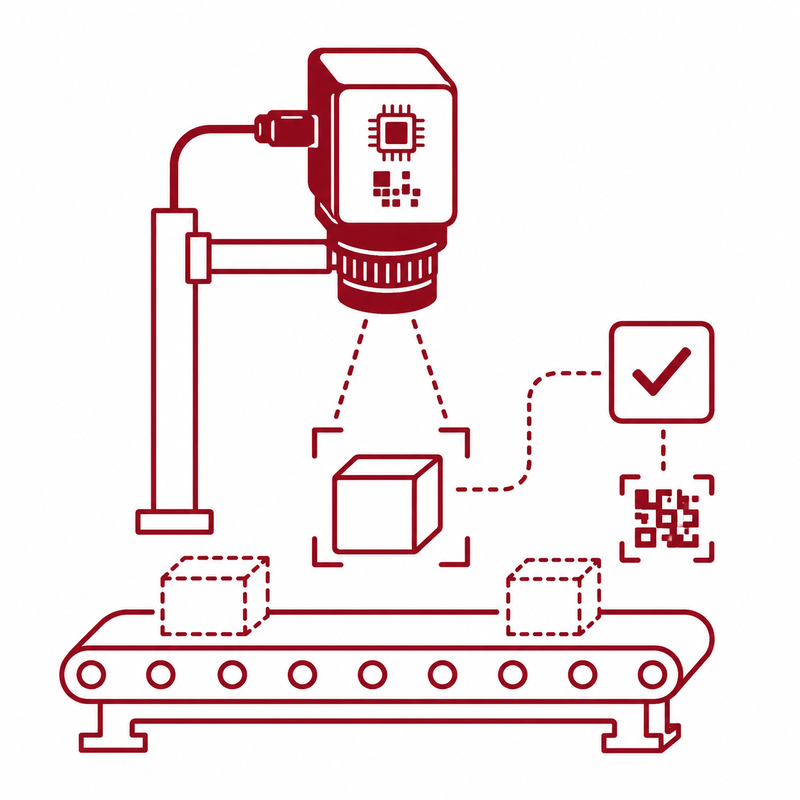
Intelligent camera systems
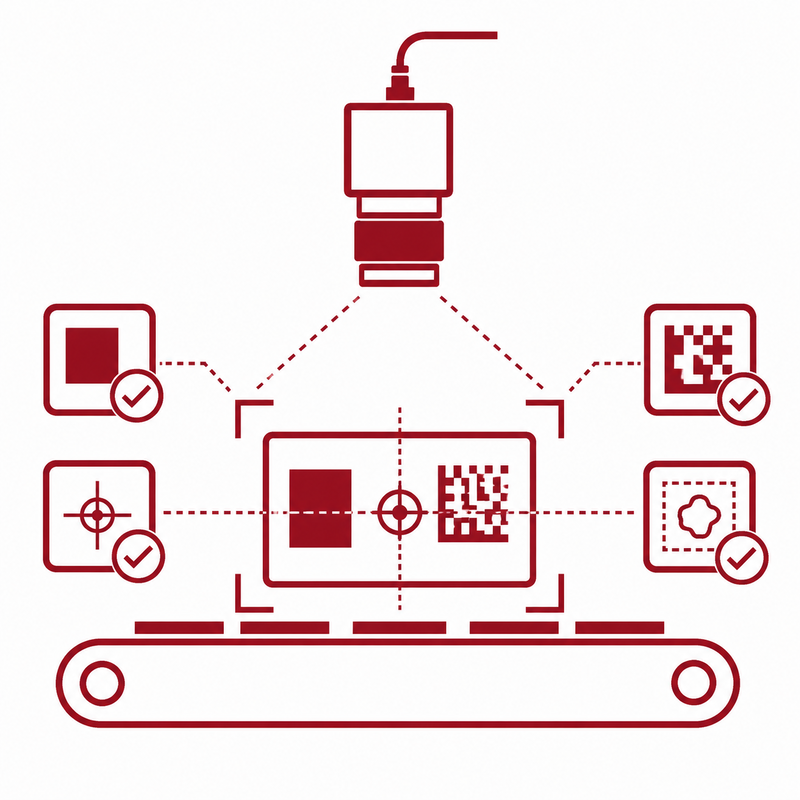
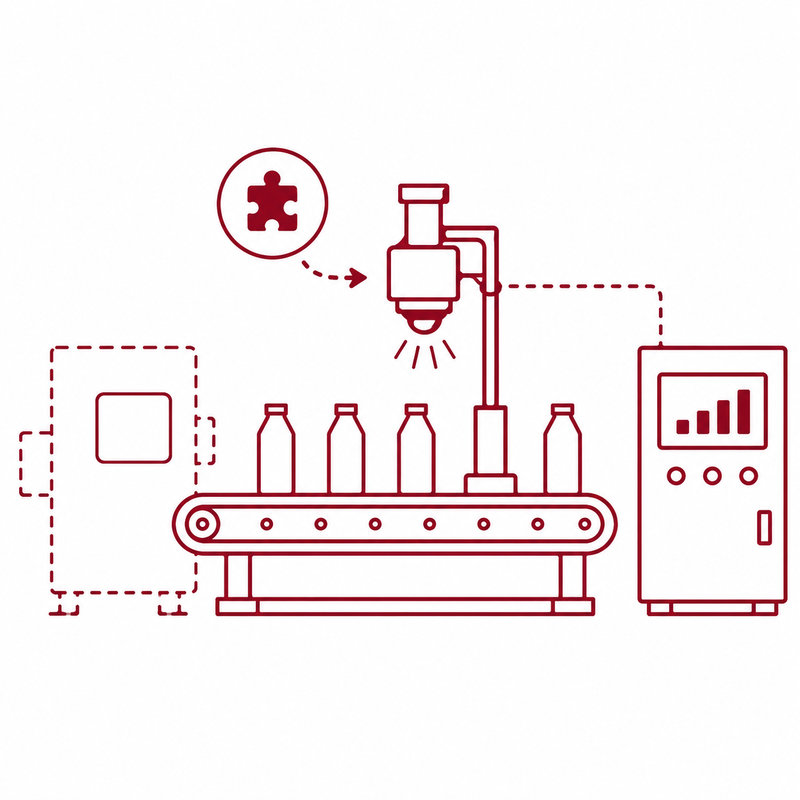
Intelligent camera systems combine image capture and image analysis directly within a single compact unit. They are particularly well suited to decentralised inspection tasks where individual features need to be checked directly at specific points on the machine or production line.
OCTUM integrates smart camera systems wherever it makes technical sense – for example, for code verification, presence monitoring, position checking or simple quality checks with clearly defined criteria.
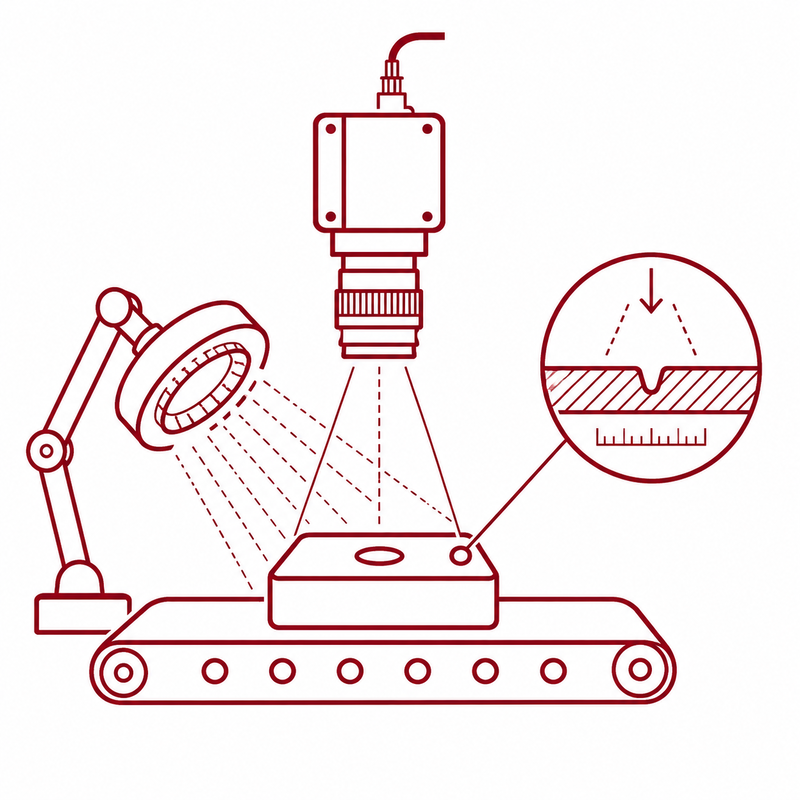
Lighting and optics
The choice of light and optics is crucial for consistent inspection results. Often, it is not the camera alone, but the correct visualisation of the inspection feature that determines whether defects can be reliably detected.
OCTUM specifically tailors the lighting, lens, camera position and installation configuration to the product, surface, cycle time and inspection task. This produces reproducible image data that forms the basis for reliable evaluation.
System integration for machinery, plant and production lines
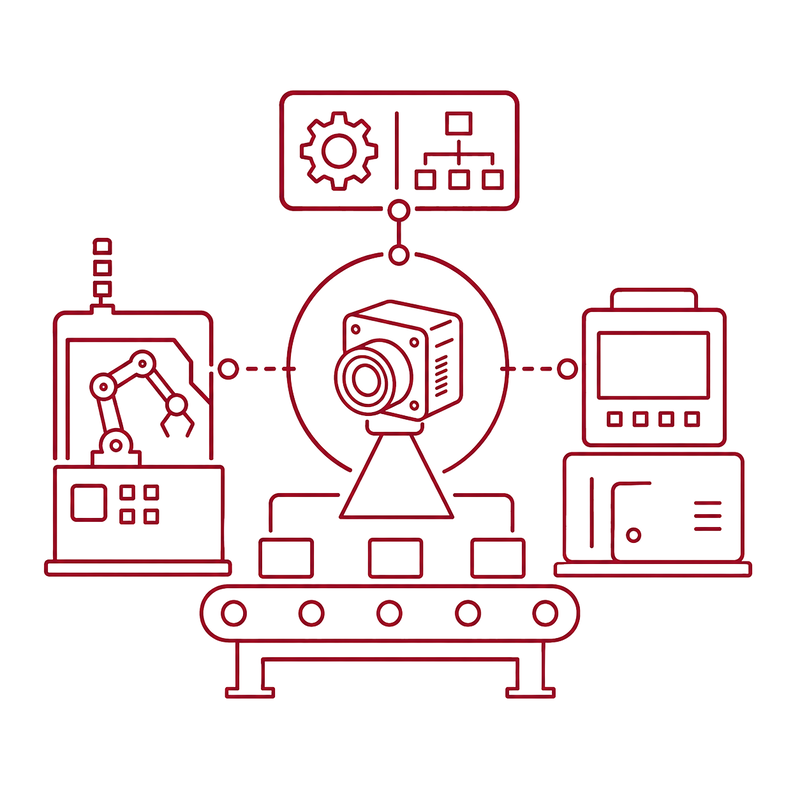
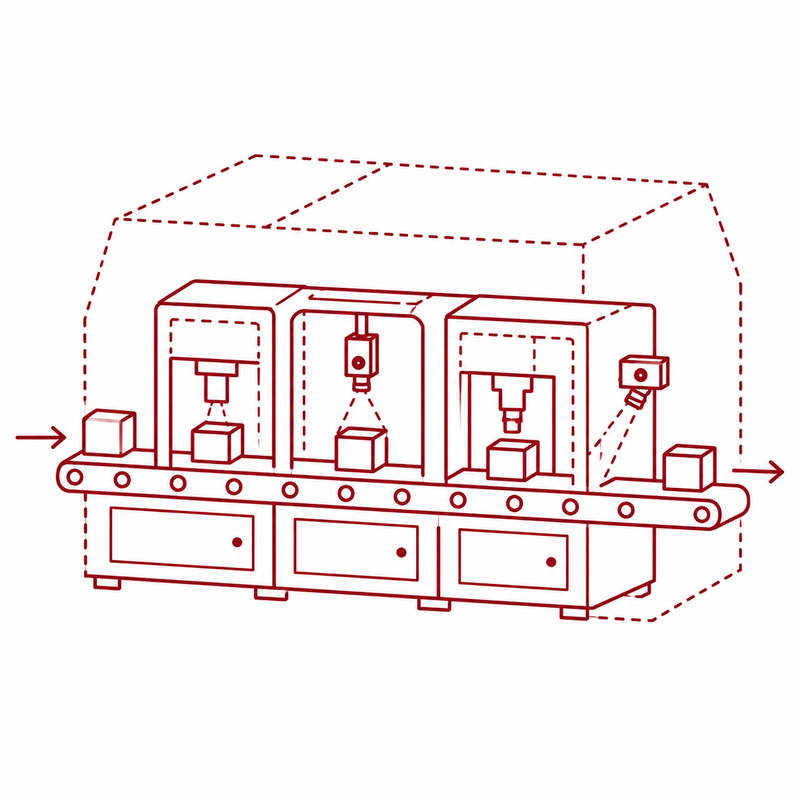
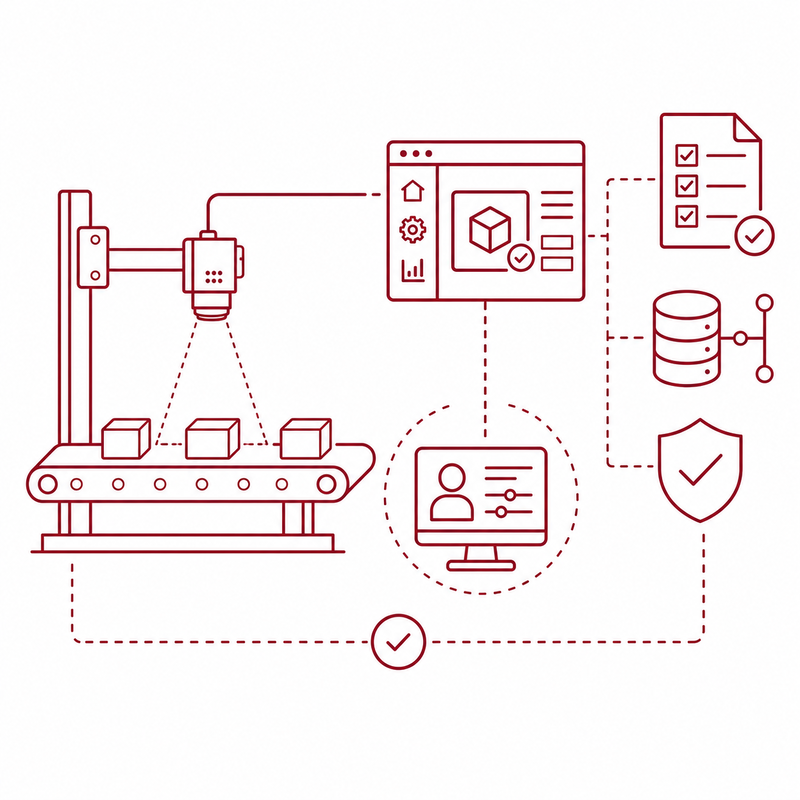
An image processing system is only successful if it is seamlessly integrated into the production process. That is why OCTUM considers not only the optical inspection itself, but the entire application environment.
This includes the camera, optics, lighting and software, as well as the mechanical components, interfaces, user interface, data connectivity, validatability and serviceability.
As a systems integrator, OCTUM works closely with machine builders, plant manufacturers and manufacturing companies. Inspection stations can be incorporated into the design phase of new plants or retrofitted into existing production lines.
Even if new formats are to be run on a system, products need to be adapted or additional inspection criteria are required, OCTUM provides support for the expansion and adaptation of existing machine vision solutions.
Adapting to new requirements
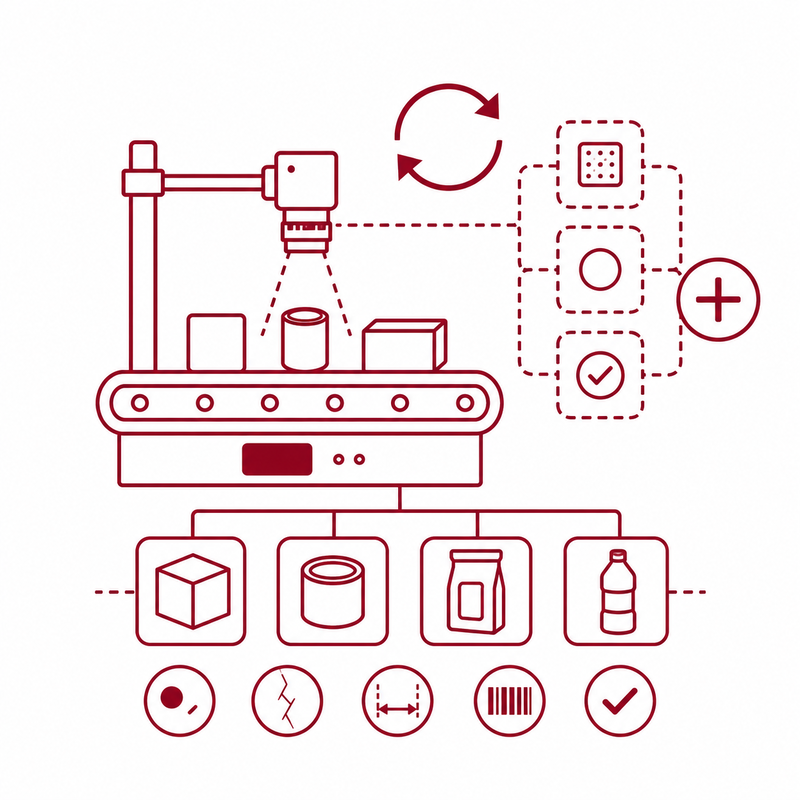
When new products, formats or variants are processed on a line, or additional inspection criteria are introduced, existing machine vision solutions can be expanded and adapted. This includes new features, defect patterns, documentation requirements or changes to process conditions.
Industrial image processing for regulated production environments
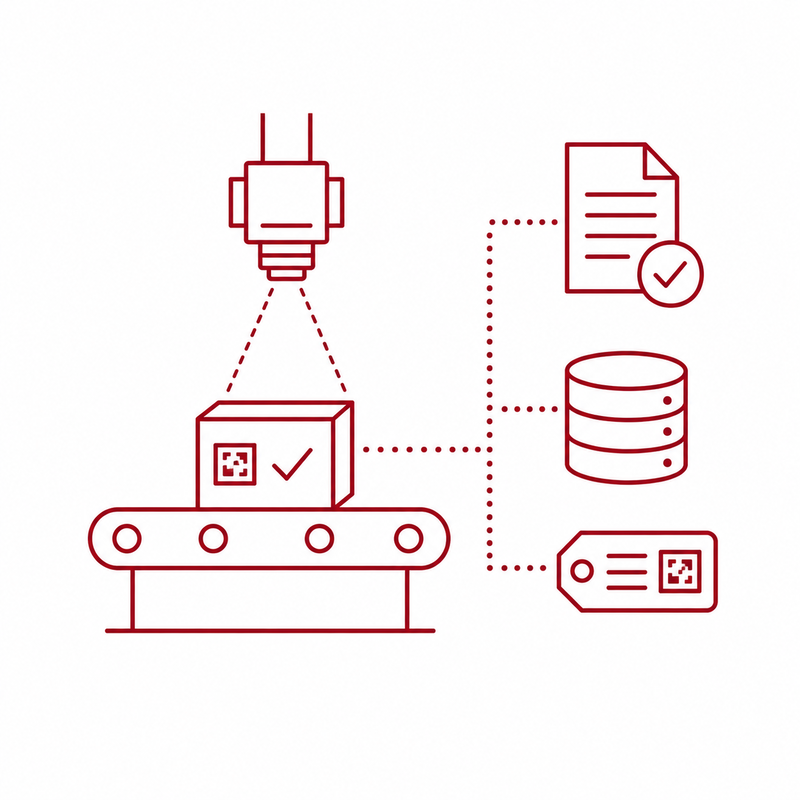
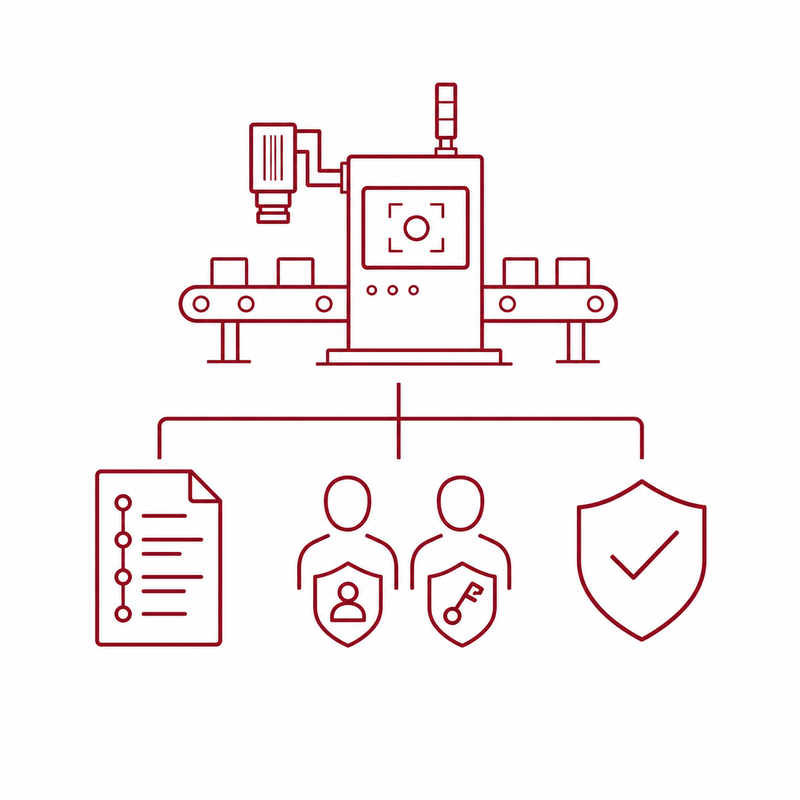
In sectors such as pharmaceuticals and medical technology, inspection systems must not only inspect reliably, but also deliver traceable and documentable results. Requirements relating to user management, audit trails, version control, change documentation and validability play a key role in this context.
OCTUM develops image processing solutions for production environments where process reliability, traceability and documented quality are crucial. This applies to both individual inspection stations and complex inspection systems featuring software, data connectivity and long-term support.
Why OCTUM?
OCTUM specialises in machine vision, AOI systems and optical quality inspection in demanding production environments. As a systems integrator, OCTUM develops solutions that are not viewed in isolation, but are tailored to the actual production environment.
- 30 years’ experience in industrial image processing
- more than 6,000 systems installed worldwide
- in-house software solutions such as OCvis, OCTUMISEr and CV-Inspect
- Experience in the pharmaceutical, medical technology, packaging technology and automotive sectors
- Integration into existing machinery and new plant concepts
- Combination of traditional image processing, 3D methods and deep learning
- Support ranging from feasibility studies to service and training
- Solutions for regulated production environments
When is machine vision worthwhile?
Industrial machine vision is worthwhile when products need to be inspected regularly, quickly, consistently and in a way that can be documented. It is particularly useful for high-volume production, short cycle times, safety-critical products or situations where there are strict traceability requirements.
What is the difference between industrial image processing and AOI?
Industrial image processing is the umbrella term for camera-based inspection systems used in manufacturing. AOI stands for automatic optical inspection and refers to the automated visual inspection of products, assemblies, surfaces or packaging.
When is deep learning appropriate?
Deep learning is particularly useful when defect patterns vary significantly, surfaces are irregular, or traditional rules do not perform consistently enough. In many projects, the combination of traditional image processing and deep learning proves to be particularly effective.
AOI Systems
Automated optical inspection for 100% inspection, in-line quality control and reproducible test results directly within the production process.
> Find out more
System Integration
Machine vision and AOI are integrated into machines, systems and existing production lines – including interfaces, operating concepts and data connectivity.
> Find out more
Feasibility study
Do you have a specific inspection task but are still unsure whether it can be reliably carried out using image processing or AOI? OCTUM assesses the product, defect patterns, cycle time, lighting, camera and evaluation logic, thereby providing a sound basis for decision-making before you invest.
Do you have a challenging inspection task?
Talk to OCTUM about your requirements. Together, we will assess which vision system is technically sound, economically viable and reliable in the long term – whether for a new machine, an existing production line or additional inspection criteria.