



syringe.inspect – Inspection system for syringes in the pharmaceutical and medical technology industries
100% inline inspection of glass and plastic syringes
syringe.inspect is a modular OCTUM inspection system for the automated quality inspection of syringes in the pharmaceutical and medical technology industries. The system is designed for glass and plastic syringes, pre-filled syringes, Luer-Lock adapters, Luer cones, and syringes with safety tips.
The inspection can be integrated into assembly, filling, capping, and packaging processes. Defective syringes or components are reliably detected and can be specifically removed from the production process.

Any questions?
Get directly in touch with our
experts on +49 7062 91494-0
or write to us using our contact form
What is syringe.inspect?
syringe.inspect inspects syringes inline for quality-related characteristics such as geometry, assembly condition, surface defects, finger flange, Luer-Lock adapter, plunger rod, silicone coating, label fit, print quality, variable data, codes, plain text, and completeness within the syringe nest. The systems have a modular design and can be configured to suit the product, process, cycle time, and regulatory requirements.
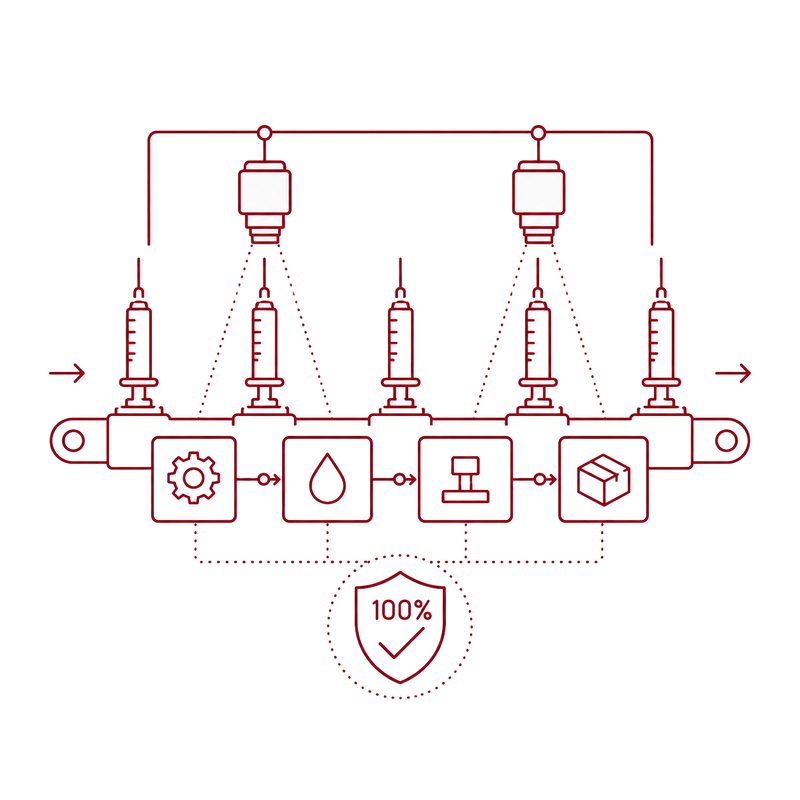
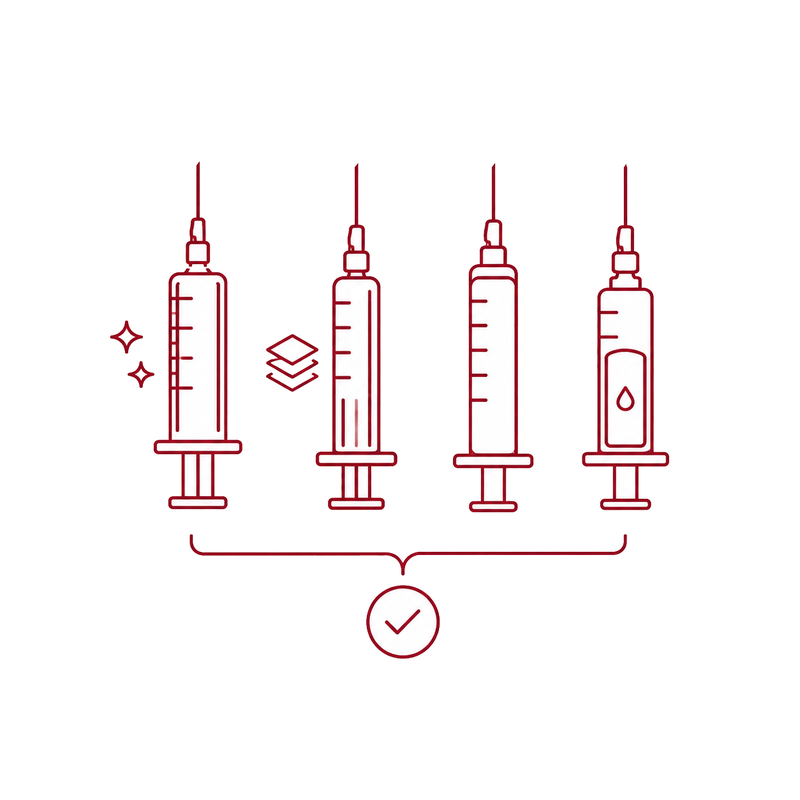
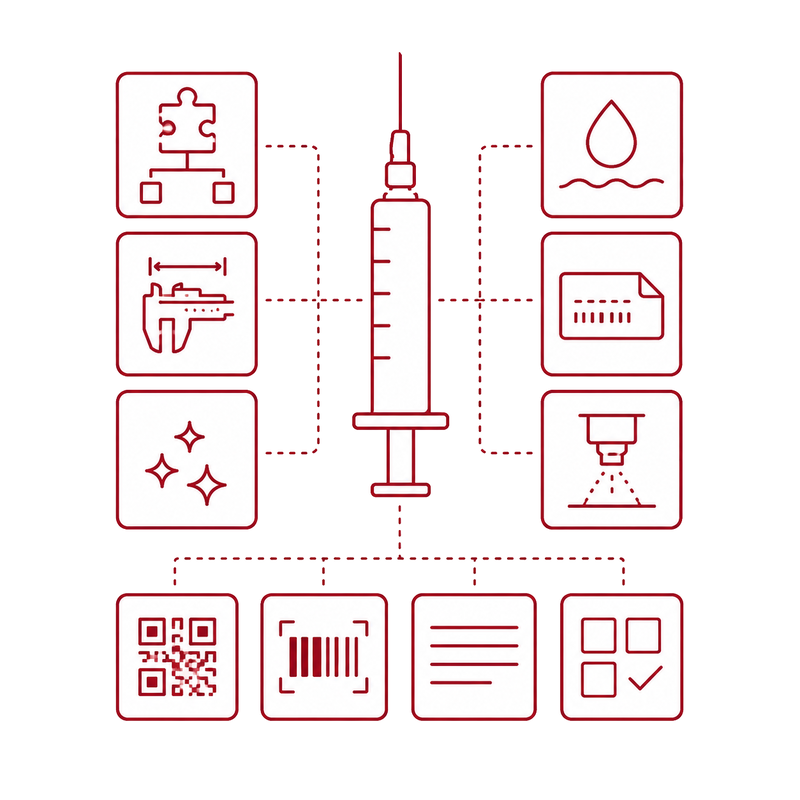

syringe.inspect can combine various inspection tasks throughout the entire production process. Depending on the application, the camera, lighting, inspection software, installation configuration, and interfaces are tailored to the syringe type, format, machine cycle time, and inspection objective.
During the assembly process, syringe.inspect systems quickly and reliably detect defects and deviations from the specification, such as missing or incorrectly positioned dispensing tips, any kind of chipping on the Luer lock adapter or finger flange, incorrect total syringe length and uneven siliconisation of the inside of the syringe. This enables the reliable rejection of faulty parts before the syringes are filled.
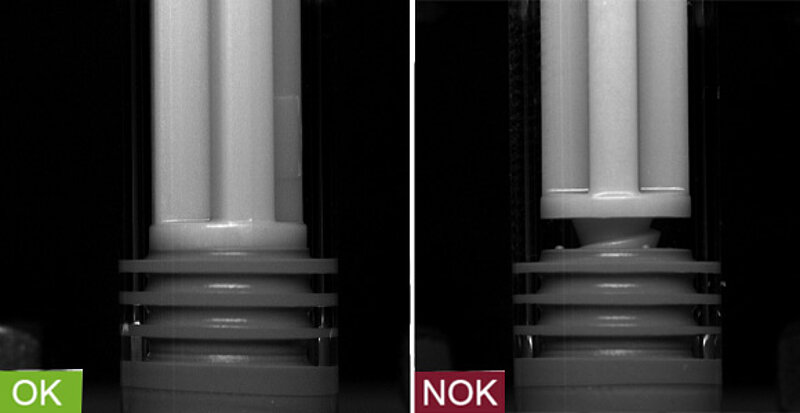
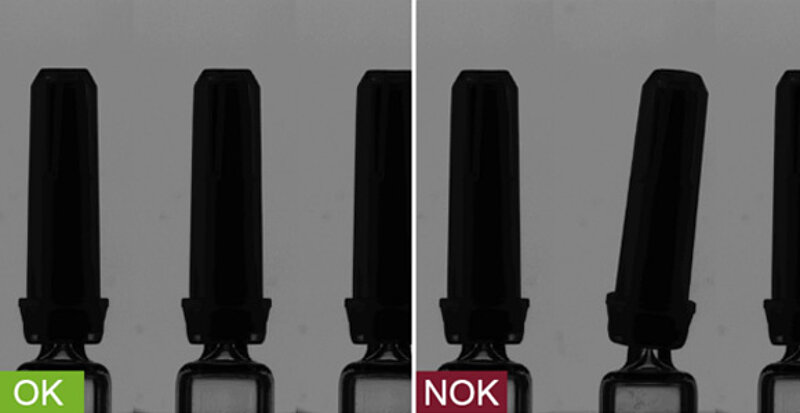
Assembly inspection - piston rod
Piston rod assembly inspection
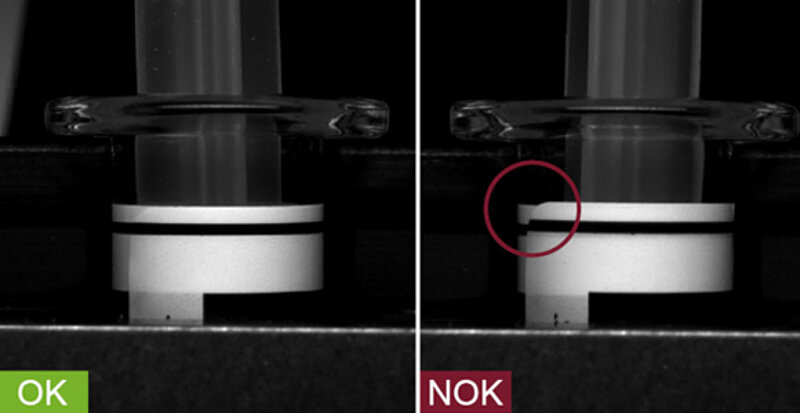
The correct assembly of the piston rod is a key quality factor in syringe manufacturing. syringe.inspect verifies whether the piston rod is correctly screwed into the stopper and whether the specified screw-in depth is maintained. Deviations can be detected early, and defective syringes can be reliably removed from the production process.
Inspected features:
- Screw-in depth of the piston rod into the stopper
- Correct fit of the piston rod
- Assembly deviations between the piston rod and the stopper
Benefits:
Defective assemblies are detected before subsequent process steps. This reduces follow-up costs and increases process reliability in syringe manufacturing.
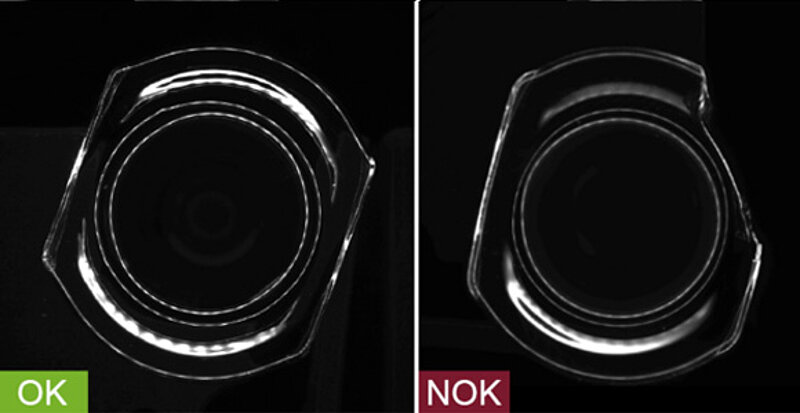
Finger flange inspection
The finger flange is a functionally critical part of the syringe and must be free of damage, chips, and geometric deviations. syringe.inspect performs a visual inspection of the finger flange and reliably detects irregular contours or defects.
Inspected features:
- Damage to the finger flange
- Chip marks
- Shape and contour deviations
- Visible surface defects in the inspection area
Benefits:
The inspection helps ensure consistently high product quality and prevents damaged syringes from entering subsequent process steps or the packaging.
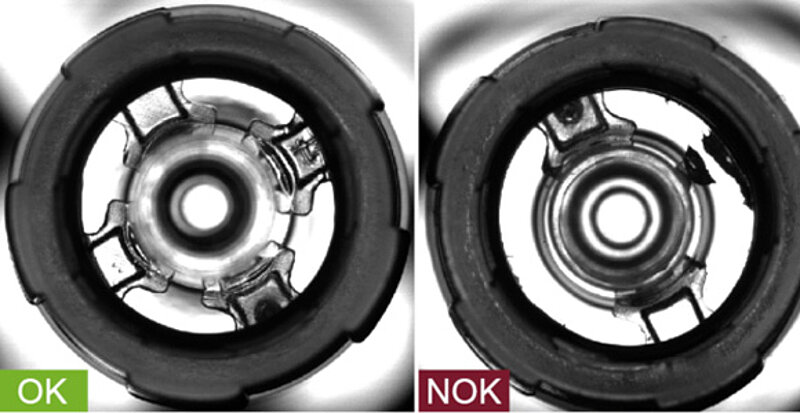
LLA flap inspection
For syringes with Luer-Lock adapters, the adapter’s flaps must be complete and undamaged. syringe.inspect visually inspects the flap geometry and detects defects such as damage or breakage.
Inspected features:
- Damage to the LLA wings
- Chips
- Incomplete or deformed wing areas
- Deviations from the target geometry
Benefits:
Defects in the Luer-Lock adapter can impair the syringe’s function. The LLA wing inspection enhances safety in the assembly process and improves quality assurance prior to further processing.
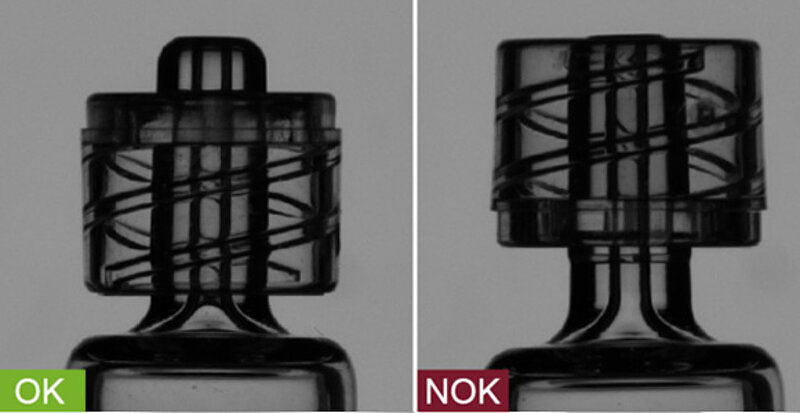
Luer-Lock adapter inspection
The Luer-Lock adapter is a key connection point on the syringe. syringe.inspect inspects the adapter for correct assembly, orientation, and potential damage. This allows for the early detection of assembly errors and defective components.
Inspected features:
- Correct assembly of the Luer-Lock adapter
- Orientation of the Luer-Lock adapter
- Cracks in the Luer-Lock adapter
- Damage to the wings and connection geometry
- Defective or incomplete components
Benefits:
The inspection helps reliably detect function-critical defects in the syringe’s connection area and specifically weed out defective parts.
![[Translate Inspection of silicone coating inside a syringeto English:] Applikationsbild Silikonisierung](/fileadmin/_processed_/2/e/csm_silikonisierung_0513160914.jpg)
Silicone coating inspection
The silicone coating on the inner surface of a syringe affects the syringe’s function and performance characteristics. syringe.inspect checks whether the silicone coating is present and evenly applied. Additionally, it can detect anomalies such as streaks or droplets.
Inspected characteristics:
- Presence of silicone coating
- Uniformity of coating
- Streaking
- Droplet formation
- Uneven distribution on the inner surface of the syringe
Benefits:
Reliable inspection of the silicone coating ensures consistent syringe quality and helps detect deviations in the production process at an early stage.
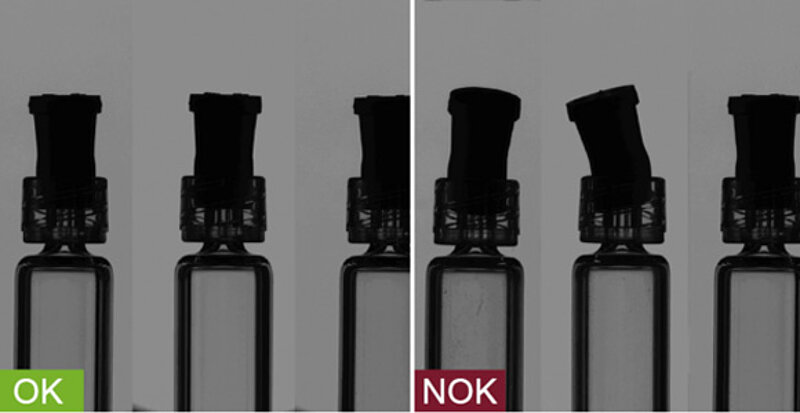
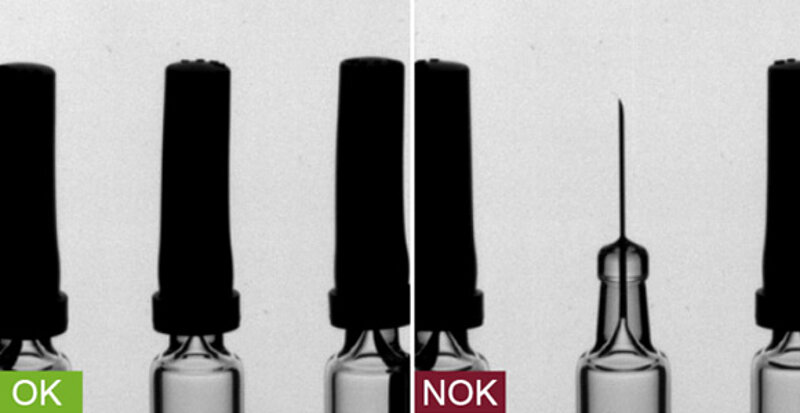
Syringe tip assembly inspection
The syringe tip must be correctly assembled and present in its entirety. syringe.inspect checks the fit and presence of the syringe tip as part of automated quality control. The inspection can be used, in particular, prior to the packaging process.
Inspected characteristics:
- Presence of the syringe tip
- Correct fit
- Assembly defects
- Deviations prior to packaging
Benefits:
Missing or incorrectly assembled syringe tips are reliably detected. This prevents incomplete products from entering the packaging.
Surface and Geometric Inspection
In addition to individual assembly and marking features, syringe.inspect can also be used to inspect surfaces and geometric features. This allows for the detection of damage, chips, dimensional deviations, or other visible defects on glass and plastic syringes.
Inspected Features:
- Surface defects
- Damage
- Chip marks
- Shape and geometric deviations
- Visible defects on the syringe body, connection areas, or functional surfaces
Benefits:
The combination of assembly, geometric, and surface inspection enables comprehensive quality control throughout the syringe manufacturing process.
After the syringes have been assembled, they are filled with the medicinal product and the ready-to-use syringes are sealed. Even during this step, possible deviations from target parameters, different component states and the correct data and position of labels for syringe identification at high speed must be reliably detected. Here, too,syringe.inspect systems provide reliable 100% inline inspection.
Label position inspection on the syringe
Labels on syringes must be correctly positioned and applied at the correct angle. syringe.inspect checks the label position directly on the syringe and detects deviations from the defined target position.
Inspected characteristics:
- Label position
- Label angle
- Skew
- Deviation from the target position
Benefits:
Label placement inspection ensures reliable labeling of syringes and supports traceability as well as further automated processing.
Fill level and sealing inspection
During the filling and sealing process, relevant conditions of the syringe must be reliably inspected. Depending on the application, syringe.inspect can inspect characteristics such as fill level, plunger position, sealing status, and other target parameters.
Inspected characteristics:
- Fill level
- Piston position
- Seal status
- Visible deviations after filling
- Correct position of relevant components
Benefits:
The inspection supports reliable quality control after filling and sealing and helps detect deviations before packaging.
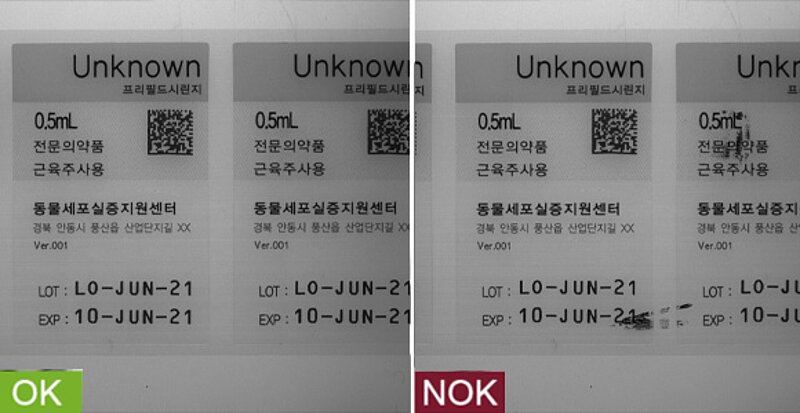
Print, code, and plain-text verification on syringes and labels
Variable data, codes, and plain text must be accurate, legible, and clearly verifiable on syringes, labels, and packaging. syringe.inspect optically inspects printed information and supports the reliable verification of relevant labeling features—from product and batch data to 1D and 2D codes and plain text.
Verified features:
- variable product and batch data
- 1D and 2D codes
- plain text
- print quality
- legibility and verifiability of the labeling
- completeness of the labeling
- compliance with defined target information
Benefits:
Print, code, and plain text inspection reduces the risk of incorrect labeling and supports secure traceability, process reliability, and reliable identification of syringes and packaging units.
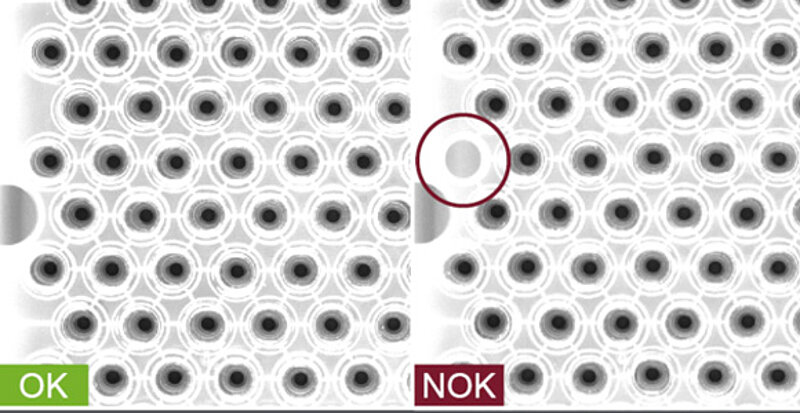
Count verification in the syringe nest or tray
During the packaging process, syringe.inspect verifies that the correct number of syringes is present in the syringe nest or tray. Missing syringes or incorrectly filled positions can be automatically detected.
Inspected characteristics:
- correct number of syringes per syringe nest
- completeness in the tray
- empty or incorrectly filled positions
- deviations in the packaging process
Benefits:
The completeness check prevents incomplete packaging units and increases safety prior to shipment or further processing.
Integration into assembly, filling, capping, and packaging lines
syringe.inspect is designed to suit the specific production environment and integrated into machines, systems, or existing production lines. In doing so, OCTUM takes into account the inspection position, machine cycle time, syringe type, format range, camera and lighting configuration, installation situation, operating concept, interfaces, and data connectivity.
As a system integrator, OCTUM considers not only the individual camera or inspection function, but the entire inspection system within the actual production process. This results in a solution that inspects reliably, delivers reproducible results, and can be adapted to different syringe formats and process requirements.
Syringe testing for regulated production environments
In the pharmaceutical and medical technology industries, inspection systems must do more than just perform reliable checks. It must be possible to document inspection results, user actions, changes, and relevant process data in a traceable manner.
syringe.inspect is designed for demanding production environments and can support requirements for documented inspection results, user management, role- and permission-based concepts, audit trails, recipe management, and validatable system concepts.



What types of defects does syringe.inspect detect?
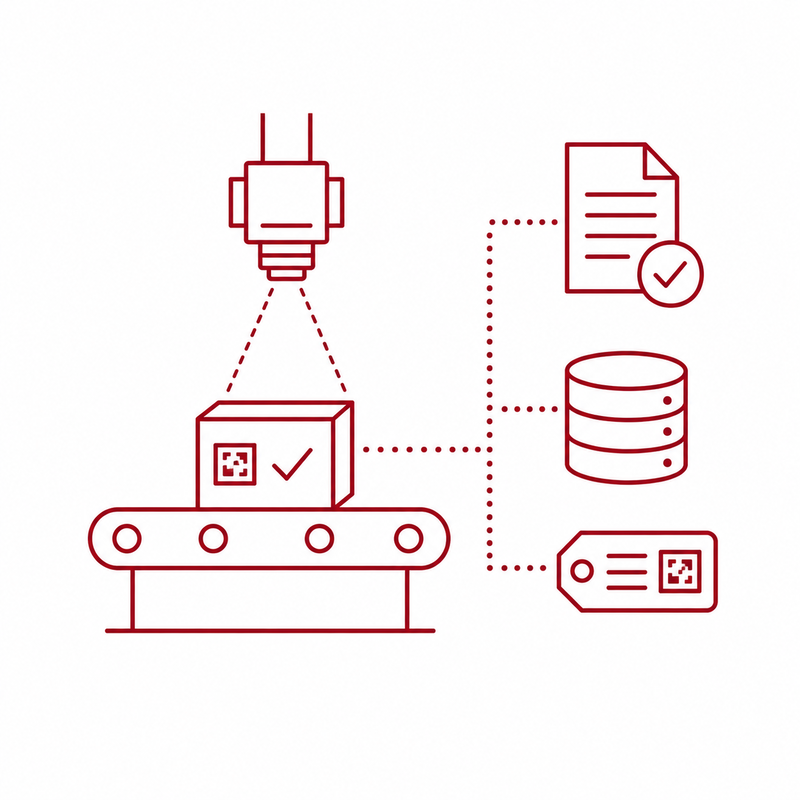
Among other things, syringe.inspect detects assembly defects, damage, breakage, geometric deviations, surface defects, improper silicone coating, misaligned labels, printing errors, incorrect codes, illegible plain text, and missing syringes in the syringe nest or tray.
Is syringe.inspect suitable for regulated production environments?
Yes. syringe.inspect is designed for demanding applications in the pharmaceutical and medical technology industries and can support requirements for documented test results, user management, audit trails, formula management, and validatable system concepts.
Request a test specification for syringes
Would you like to perform automated inspections of glass or plastic syringes? Talk to OCTUM about the syringe type, inspection criteria, machine cycle time, installation conditions, and requirements for documentation, data integration, or validation.