



Industrial Machine Vision for Packaging Inspection
Reliable Inline Inspection of Packaging, Markings and Products

Packaging must protect products, contain all required components, be correctly sealed and carry unambiguous markings. Missing components, incorrect variants, defective print or unreadable codes can lead to production disruptions, rejects and customer complaints.
OCTUM develops and integrates custom machine vision and AOI systems for the automated quality inspection of primary and secondary packaging. Typical applications include tubes, labels, folding cartons, shipping cartons, trays, blister packs, bags, containers, product sets and other packaging formats.
The inspection systems check characteristics including presence, completeness, packaging condition, product variant, labels, print, variable text and 1D and 2D codes.
Each solution is engineered around the product, packaging material, relevant defect characteristics, target throughput and available installation space. Defective units can be detected directly within the production process, rejected automatically and, depending on the system configuration, documented in a traceable manner.

Any questions?
Get directly in touch with our
experts on +49 7062 91494-0
or write to us using our contact form
Inspection Solutions for Packaging, Labels and Tubes
Our inspection solutions cover areas including:
OCTUM provides modular product solutions and custom-engineered machine vision systems for different packaging processes.

tube.inspect – Inspecting Tubes Before and After Filling
tube.inspect is a modular inspection system for metal, laminate and plastic tubes. Multiple inspection stations can be connected within a tube filling and sealing machine and operated centrally.
Typical inspection tasks include:
- Tube opening and geometry inspection
- Detection of visible particles and contamination
- Fold, seam and trim inspection
- Inspection of visible closure characteristics
- Print, OCR and OCV inspection
- Reading and verification of 1D and 2D codes
The modules are configured to suit the tube material, format, machine design, production speed and inspection objective.

label.inspect – Inspecting Labels and Markings
label.inspect checks labels and markings directly within the printing, labelling or packaging process.
Depending on the application, the system can inspect:
- Label presence and correct variant
- Position and alignment
- Visible label application defects
- Print and artwork
- Variable text using OCR and OCV
- 1D and 2D codes
- Consistency with recipe, work order or production data
Missing, incorrectly positioned or incorrectly printed labels can be detected at an early stage and the affected units can be rejected automatically.
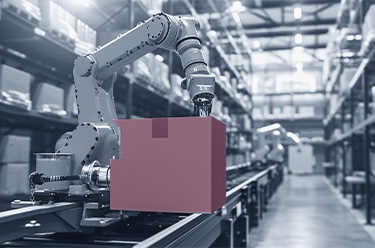
pack.inspect – Inspecting Packaging Inline
pack.inspect checks products, packaging and packaging components directly within the packaging process.
Typical inspection tasks include:
- Presence and completeness
- Product variant, position and orientation
- Labels, print, text and codes
- Closures, flaps and folds
- Visible damage and foreign objects
The inspection stations are integrated into the packaging machine and can be operated centrally.
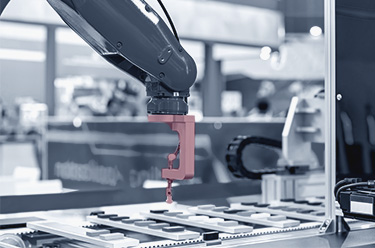
Machine Vision for Pick-and-Place Applications
OCTUM machine vision systems can identify the type, position and orientation of products and transfer the calculated data to the machine or robot control system.
Products can therefore be picked up automatically, aligned and placed into packaging or transferred to subsequent process stations.
Possible functions include:
- Identification of different product types
- Detection of position and orientation
- Verification of the product position
- Calculation of the gripping position
- Transfer of position data to the robot control system
- Inspection before or after the handling step
Pick-and-place solutions can be configured for bags, cartons, cups, jars, blister packs and many other products.

Is Your Application Not Listed?
Many packaging processes require a custom-configured inspection solution. OCTUM transfers proven machine vision concepts to new products, packaging formats and machine designs.
The decisive factors include the product and packaging, relevant defect characteristics, material and surface properties, product variants, target throughput, installation space, interfaces and documentation requirements.
Speak directly to one of our experts: +49 7062 91494-0
Alternatively, send us a message using our contact form
OCR, OCV and Code Verification
Batch numbers, serial numbers, manufacturing dates, best-before dates and expiry dates can be read or verified against known reference values.
Barcodes, Data Matrix codes, GS1 codes, QR codes and other 1D and 2D codes can be decoded and compared with recipe, work order or production data.
Requirements for standards-based print quality verification or code grading must be defined and technically qualified for the specific project.
Packaging and Closure Inspection
Visible characteristics such as closed flaps, correct folds, closure positions, trim edges, packaging contours and visible damage can be checked immediately after the packaging or closing process.
Optical inspection evaluates visible characteristics. It does not replace physical leak testing, seal-integrity testing or seal-strength testing.
Suitable for Different Packaging Types and Industries
The inspection systems are adapted to the packaging format, material, surface properties, production process and quality requirements.
Typical Industries
OCTUM develops packaging inspection systems for industries including:
- Pharmaceuticals
- Medical devices
- Cosmetics and personal care
- Consumer goods
- Chemical products
- Technical products and components
- Other automated packaging applications
Technical feasibility is evaluated for the individual product, packaging and actual process conditions.
Integrated into Packaging Machines and Production Lines
Reliable packaging inspection results from the coordinated interaction of image acquisition, product transport, machine communication, reject handling and data processing.
OCTUM integrates machine vision and AOI systems into both new packaging machines and existing production lines.
Depending on the project, the following aspects are considered:
- Camera, lens and lighting concept
- Packaging material and surface properties
- Product handling and inspection position
- Target throughput and available inspection window
- Triggers, encoders and other process signals
- Connection to the PLC and machine control system
- Pass/fail decisions
- Reject handling and reject verification
- Recipe and format management
- Central operation of multiple inspection stations
- Interfaces to MES and higher-level systems
- Storage and transfer of inspection data
- Long-term maintainability and serviceability
The achievable inspection performance depends on factors including the number and complexity of the inspection characteristics, packaging format, product spacing, image resolution, number of cameras and available evaluation time.
>> Learn More About System Integration
>> Evaluate Technical Feasibility
Packaging Inspection for Regulated Production Environments
For packaging applications in pharmaceuticals, medical devices and other regulated industries, it may not be sufficient simply to identify defective units. User access, changes to inspection programs and relevant inspection results may also need to be managed in a traceable manner.
Depending on the project, OCTUM systems can incorporate functions including:
- Individual user accounts
- Role-based access management
- Logged user actions
- Audit-trail functions
- Controlled recipe and format management
- Version and change history
- Storage of inspection and event data
- Batch and work-order assignment
- Data integrity and traceability
- Interfaces to higher-level systems
- Documentation supporting qualification and validation
The specific system configuration depends on the intended use, product, operational processes and the user’s validation concept.
An inspection system alone does not establish regulatory compliance. However, it can provide technical functions and documentation that support the operator’s quality and validation processes.
4. Commissioning and Long-Term Support
OCTUM installs the system, supports commissioning and configures the required inspection programs and product formats.
Following system handover, OCTUM continues to provide support with optimisation, training, new formats, additional inspection characteristics, maintenance and long-term stable operation.
Why Choose OCTUM for Automated Packaging Inspection?
OCTUM has been developing machine vision and AOI systems for demanding production environments since 1996.
- Experience in industrial machine vision since 1996
- More than 6,000 systems installed worldwide
- Modular solutions for tube, label and packaging inspection
- Custom machine vision systems for individual packaging processes
- Proprietary software solutions such as OCVis, OCTUMISEr and CV-Inspect
- Experience with high machine speeds and changing product formats
- Integration into new machines and existing production lines
- Experience with regulated production environments
- Combination of cameras, lenses, lighting, software and machine connectivity
- Support from feasibility studies through commissioning, service and training
For operators, this means reproducible inline inspection, early defect detection, fewer manual inspections, reliable product and variant assignment and a reduced risk of rejects and customer complaints.
Which Inspection Tasks Can Be Automated?
Typical tasks include presence and completeness inspection, product and variant inspection, position and orientation inspection, label and print inspection, OCR, OCV, code verification, packaging and closure inspection and the detection of visible foreign objects.
Is 100% Inline Inspection Possible?
Depending on the product, packaging, inspection characteristics, production speed and machine design, the inspection system can be engineered to inspect every unit during production.
Technical feasibility and the detectability of the individual defect characteristics are assessed for each project.
Can Variable Text and Codes Be Inspected?
Yes. Batch numbers, serial numbers, manufacturing dates, best-before dates and expiry dates can be read using OCR or verified against known reference values using OCV.
1D and 2D codes can be decoded and checked for content, data structure and consistency with production data.
Can Existing Packaging Lines Be Retrofitted?
Yes. OCTUM integrates machine vision and AOI systems into both new packaging machines and existing production lines.
Available installation space, product handling, machine speed, control interfaces, operator interaction and reject handling are considered during system design.
Are OCTUM Systems Suitable for Regulated Applications?
Depending on the project, functions such as user management, audit trails, controlled recipe and format management, data integrity, traceability and documented inspection results can be incorporated.
The specific configuration depends on the intended use and the operator’s validation concept.
When Is a Feasibility Study Recommended?
A feasibility study is particularly useful for new packaging formats, difficult-to-detect defects, reflective or transparent materials, small codes, a high number of variants, demanding production speeds or limited installation space.
It provides a reliable technical basis for decision-making before implementation.
Discuss Your Packaging Inspection Application
Would you like to inspect packaging, tubes, labels, print, text, codes or an entire packaging process automatically?
Tell us about your product, packaging format, relevant quality characteristics, typical defect types, product variants, target throughput and planned installation conditions.
Please also let us know about any requirements relating to machine connectivity, reject handling, documentation, traceability or format management.
Together, we will determine which machine vision solution is technically suitable and can be integrated reliably into your packaging machine or production line.