



patch.inspect – Inspection Systems for Wound Care Products
100% Inline Inspection of Adhesive Bandages, Wound Dressings and Transdermal Therapeutic Systems
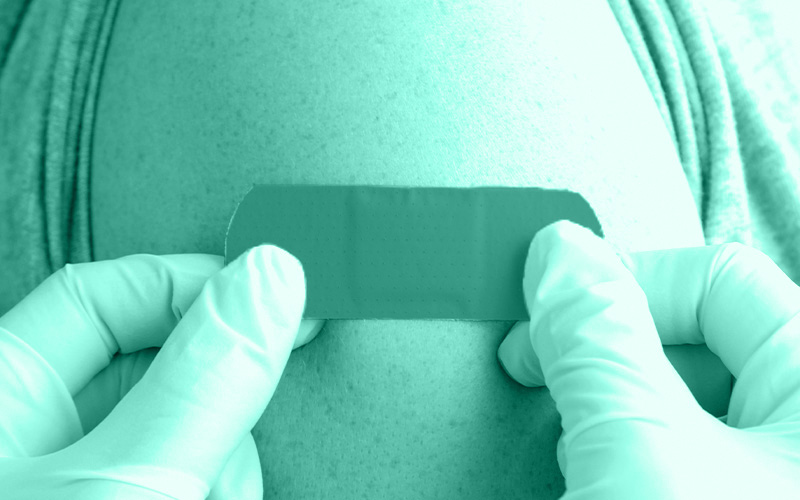
Wound care products, bandages, and transdermal systems come into direct contact with the skin and must meet high standards for cleanliness, functionality, and product safety. Key factors include defect-free materials, correct product positioning, complete wound pads, clean application of active ingredients, reliable seal seams, and legible labeling.
patch.inspect is a modular OCTUM inspection system for the automated quality inspection of wound care products, wound dressings, medicated patches, and transdermal therapeutic systems. The system inspects products—whether in web form or as cut individual units—directly during the production or packaging process and can be integrated with a rejection mechanism to remove defective products from the production line.

Any questions?
Get directly in touch with our
experts on +49 7062 91494-0
or write to us using our contact form
What is patch.inspect?
patch.inspect is an OCTUM inspection system for 100% inline inspection of wound care products, adhesive bandages, and transdermal systems in the medical technology and pharmaceutical industries. Inspections include, among other things, contamination, surface defects, material defects, product orientation, product shape, product size, cut quality, active ingredient application, wound pad presence, centering, printing, codes, and seal seams. Each system is configured to meet specific product, material, process, and regulatory requirements.
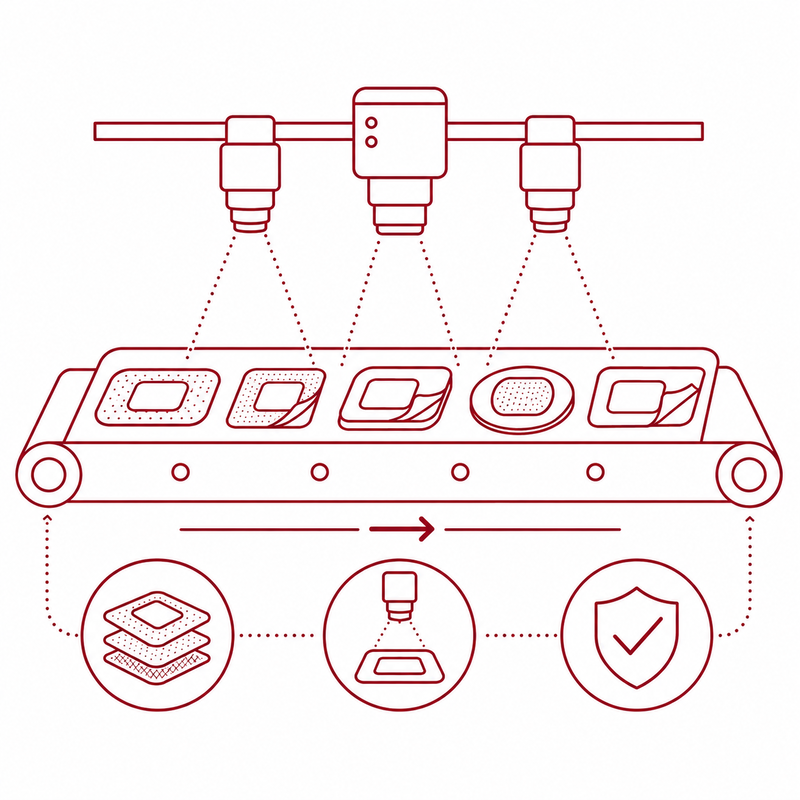
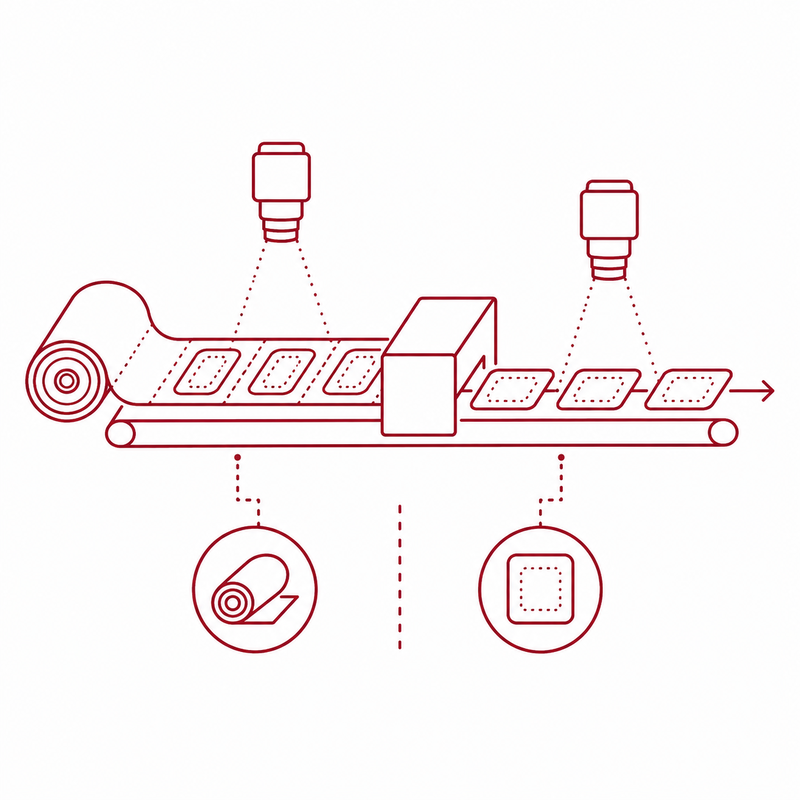
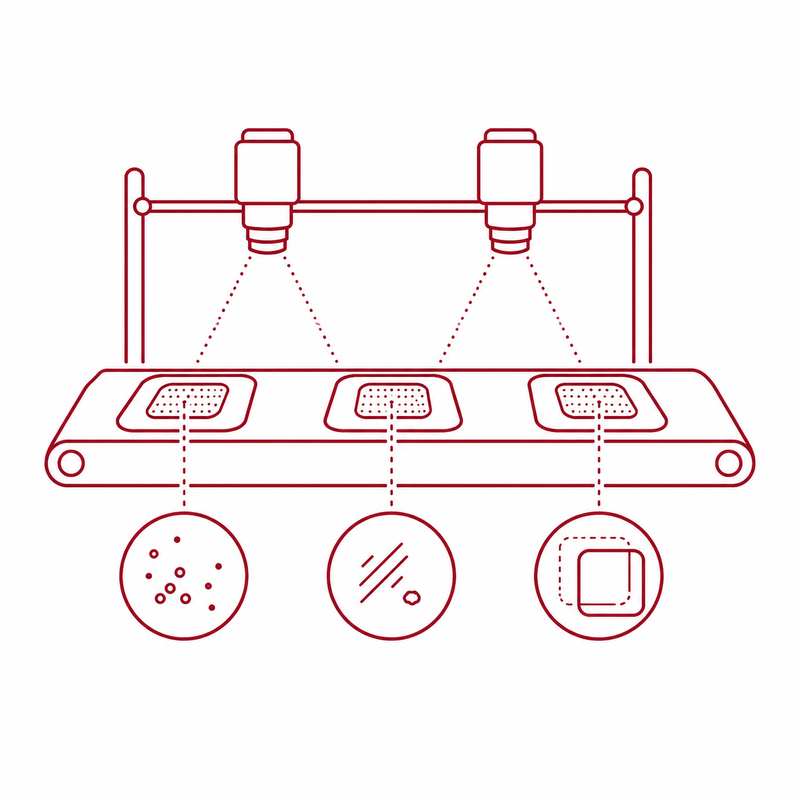
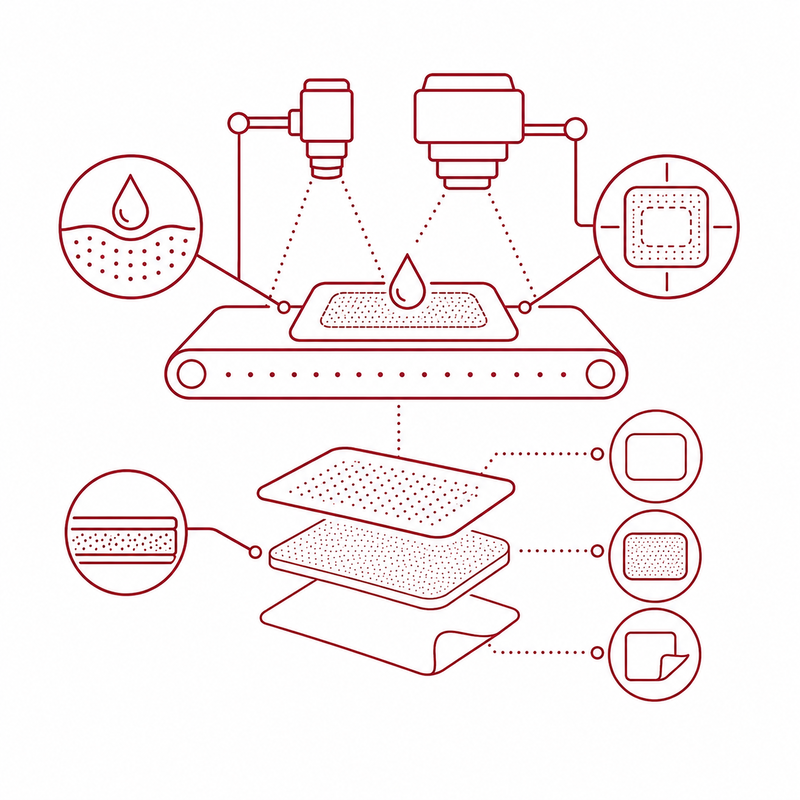
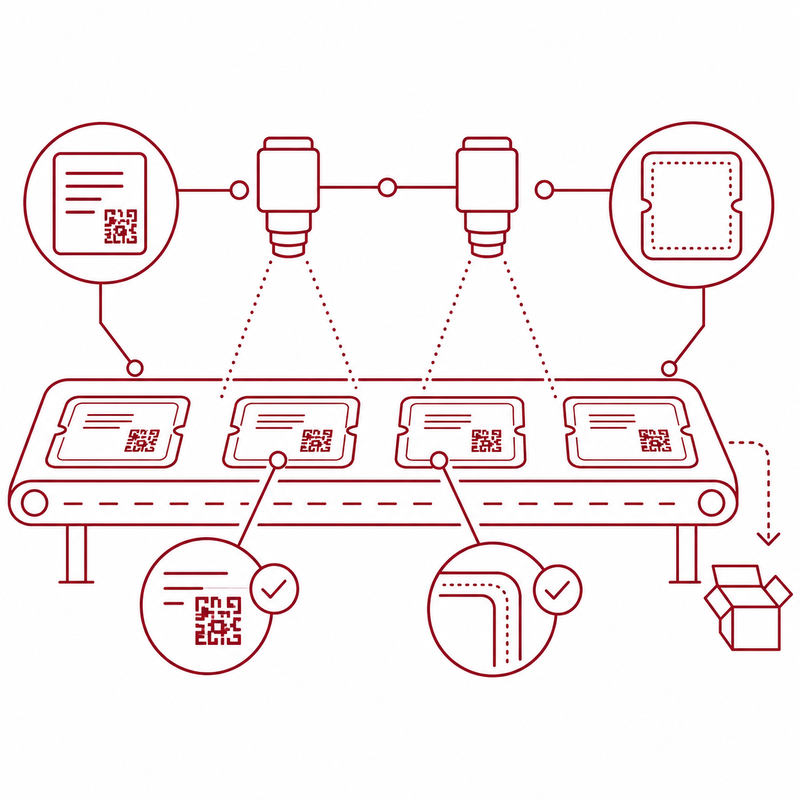

patch.inspect inspects wound care products, adhesive bandages, and transdermal systems based on relevant quality criteria that are critical to product safety, functionality, and process stability. Depending on the application, the camera, lighting, inspection software, installation configuration, rejection mechanism, and data connectivity are designed to suit the product, material, web path, machine cycle time, and inspection task.
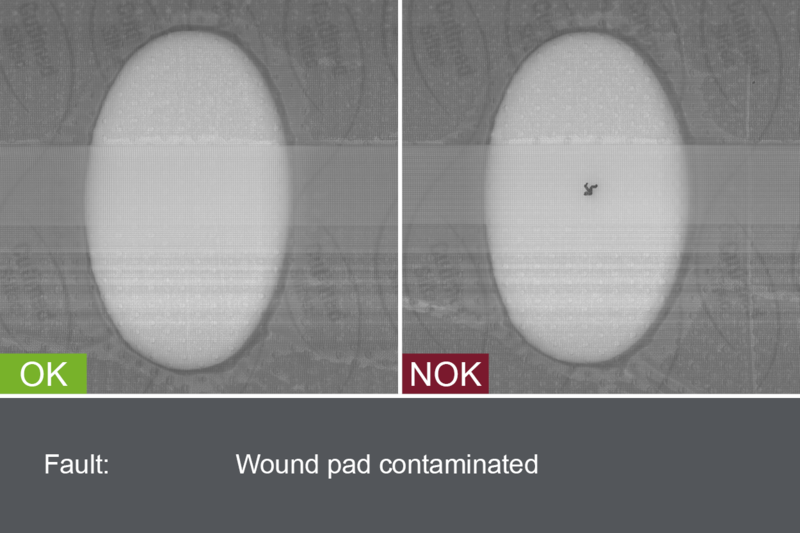
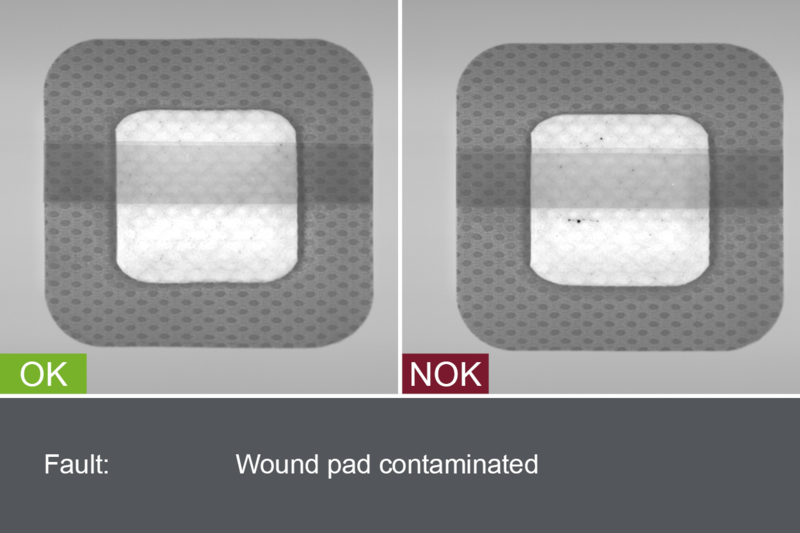
Contamination Inspection
Wound care products and transdermal systems must be free of visible contaminants and foreign matter. patch.inspect detects contamination on wound pads, carrier films, release liners, active ingredient surfaces, or packaging areas.
Inspected characteristics:
- Contamination
- Impurities
- Foreign objects
- Particles
- Deposits or residues
- Noticeable local defects
Benefits:
Contamination inspection supports product safety by helping detect defective or contaminated products early and, when connected to the rejection system, remove them from the line.
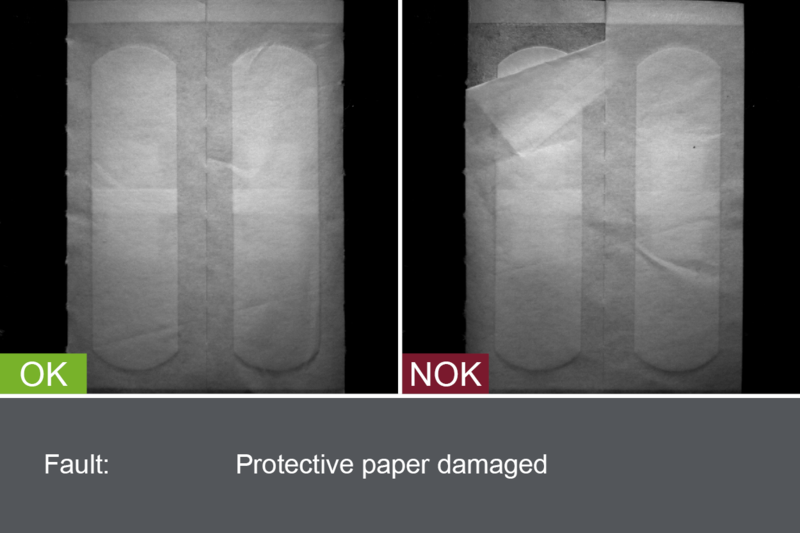
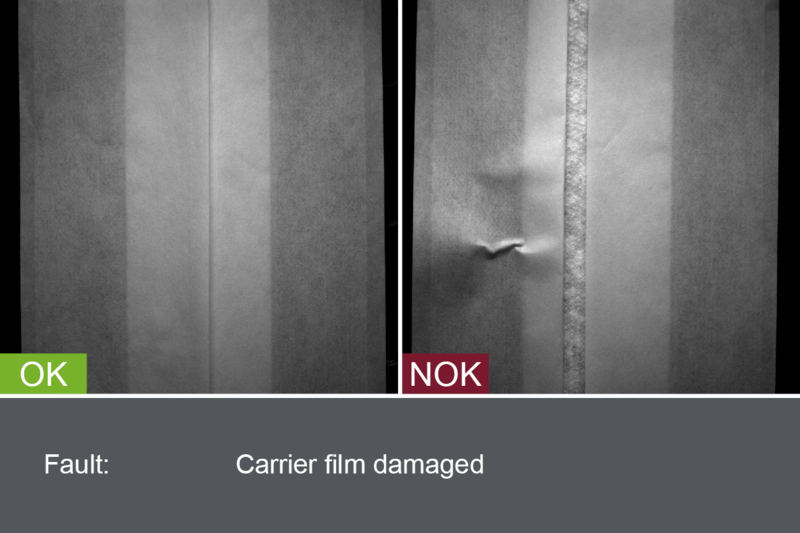
Surface and Material Inspection
Material defects or cosmetic defects can compromise the quality and function of wound care products. patch.inspect inspects relevant surface areas for visible deviations and damage.
Inspected characteristics:
- cosmetic defects
- material defects
- damage to the wound dressing
- damage to the backing film
- structural deviations
- visible surface defects
Benefits:
Surface and material inspection helps ensure consistently high product quality and reduces the risk of damaged or visually defective products reaching packaging or being shipped.
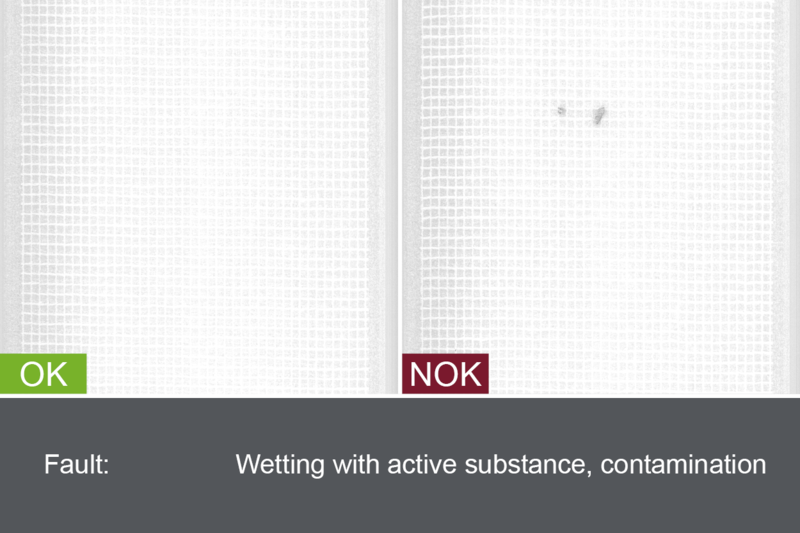
Visual Inspection of Active-Ingredient Application
For medicated patches and transdermal systems, the correct application of the active ingredient is a quality-relevant characteristic. patch.inspect evaluates visible characteristics of the active-ingredient application, such as coverage and uniformity, and detects defined deviations.
Inspected characteristics:
- Wetting with active ingredient
- Uniformity of active ingredient application
- Missing or incomplete application
- Local deviations
- Contamination in the active ingredient area
- Anomalies in multi-layer active ingredient systems
Benefits:
Inspecting the application of the active ingredient supports reliable quality control for medicated patches and transdermal systems and helps identify deviations in the production process at an early stage.
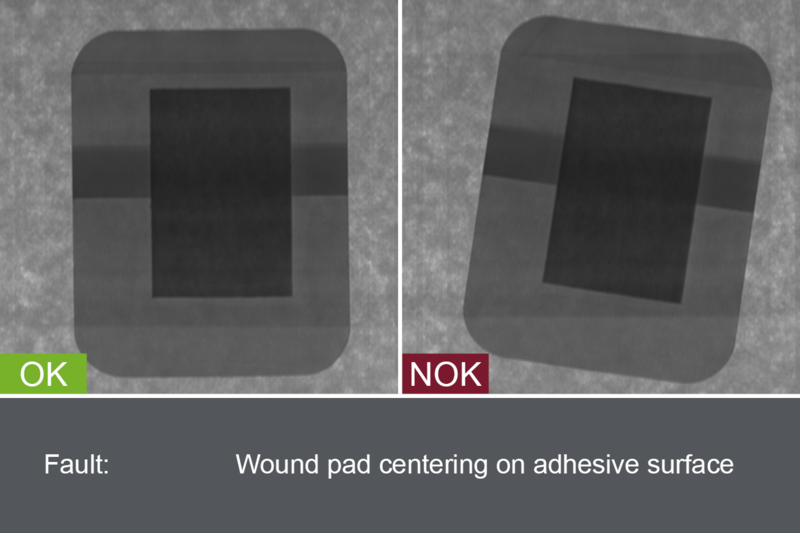
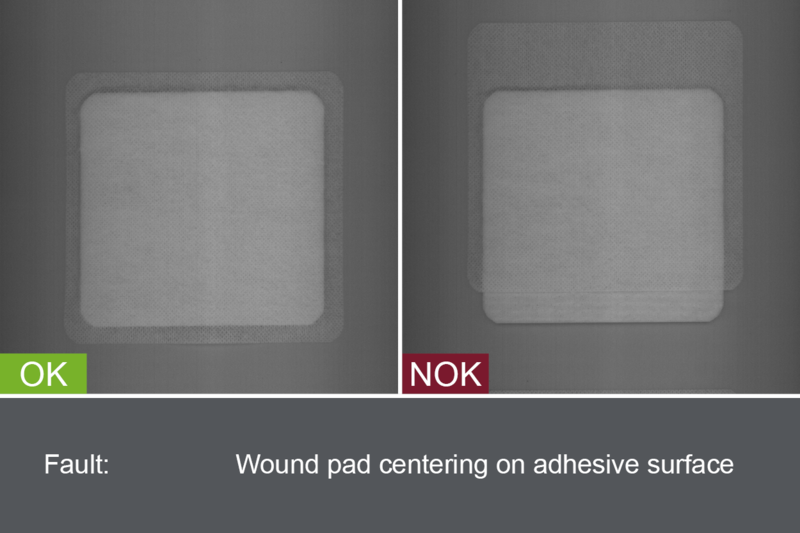
Alignment, Centering, and Positioning Inspection
Wound pads, adhesive surfaces, release liner, and carrier films must be correctly positioned relative to one another. patch.inspect checks the position, centering, and alignment of the product components.
Inspected characteristics:
- Centering of the wound pad on the adhesive surface
- Centering within the release liner
- Product position
- Alignment of individual product layers
- Skew or misalignment
- Position deviations from target characteristics
Benefits:
Position and centering inspection helps verify that multi-layer wound dressings are assembled correctly and that the individual components maintain their defined positions.
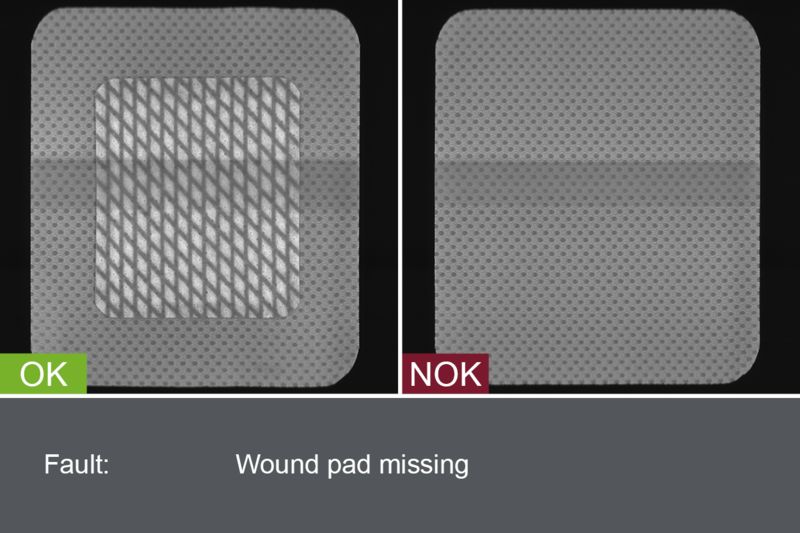
Wound Pad Presence Inspection
For wound patches and first-aid dressings, the wound pad must be fully present and correctly positioned. patch.inspect detects missing, displaced, or incorrectly placed wound pads.
Inspected characteristics:
- Wound pad present
- Complete wound pad
- Correct position of the wound pad
- Missing or incorrectly placed pads
- Damaged wound pads
Benefits:
The wound pad presence inspection helps prevent incomplete or incorrectly assembled products from reaching subsequent process steps, packaging, or shipping.
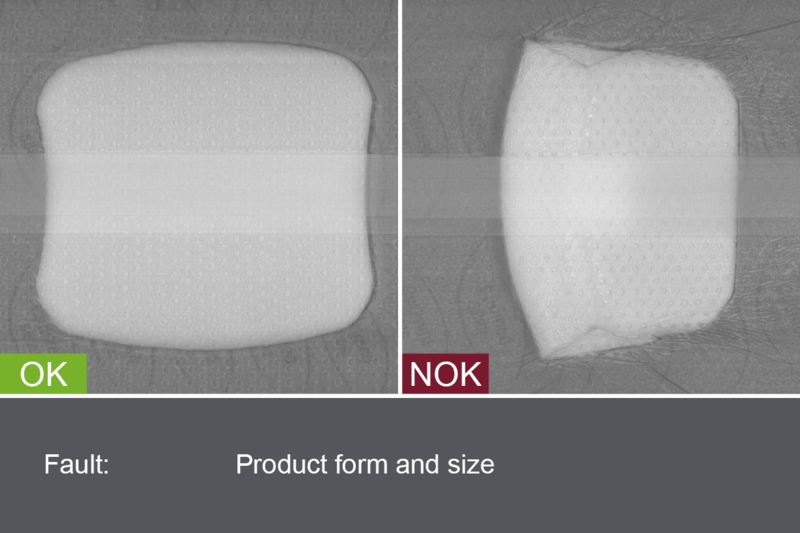
Inspection of Product Shape, Product Size, and Cut Quality
For cut products, the shape, size, and cut quality must meet the defined specifications. patch.inspect checks the contour and detects deviations, inaccurate cuts, or damaged product edges.
Inspected characteristics:
- Product shape
- Product size
- Cut quality
- Contour deviations
- Damaged or rough edges
- Shape and dimensional deviations
Benefits:
Inspecting product shape, product size, and cut quality helps ensure consistent product geometry and reliably identifies defective individual products.
Print, Code, and Labeling Inspection
Before packaging or as a final inspection, the print, code, and labeling must be correct, complete, and legible. patch.inspect can visually inspect printed information on products, labels, or packaging.
Inspected characteristics:
- Print image
- Codes
- Variable data
- Human-readable text
- Legibility
- Completeness of labeling
- Verification against defined reference data
Benefits:
Print, code, and labeling inspection reduces the risk of incorrect labeling and supports traceability, process reliability, and secure product identification.
Seal Seam Inspection
Seal seams must be complete, correctly positioned, and free of visible defects. patch.inspect performs a visual inspection of seal areas before packaging or as a final inspection.
Inspected characteristics:
- Seal present
- Correct position of the seal
- Sealing defects
- Interruptions or irregularities
- Visible damage in the sealing area
Benefits:
Seal inspection supports packaging quality by detecting visible defects before packaging units are shipped.
Integration into Production and Packaging Processes
patch.inspect is configured for the specific production environment and can be integrated into machines, systems, or existing production lines. In doing so, OCTUM takes into account product design, material, web path, inspection position, machine cycle time, camera and lighting configuration, operating concept, rejection, interfaces, and data connectivity.
As a system integrator, OCTUM considers not only the individual inspection function but the entire inspection system within the actual production process. This results in a solution that inspects reliably, delivers reproducible results, and can be adapted to different wound care products, bandage formats, web processes, and packaging requirements.
Patch Inspection for Regulated Production Environments
In the medical technology and pharmaceutical industries, inspection systems must do more than just perform reliable inspections. Inspection results, user actions, changes, and relevant process data must be documented in a traceable manner.
patch.inspect is designed for demanding production environments and can support requirements for documented inspection results, user management, role- and permission-based concepts, audit trails, recipe management, measurement system capability, and data integration.



What kinds of defects does patch.inspect detect?
Among other things, patch.inspect detects contamination, foreign objects, cosmetic defects, material defects, damage to the wound dressing, damaged backing film, misalignment, missing wound pads, deviations in active ingredient application, printing errors, and sealing errors.
Is patch.inspect suitable for regulated production environments?
Yes. patch.inspect is designed for demanding production environments in the medical technology and pharmaceutical industries and can support requirements for documented inspection results, user management, audit trails, recipe management, measurement system capability, and data integration.
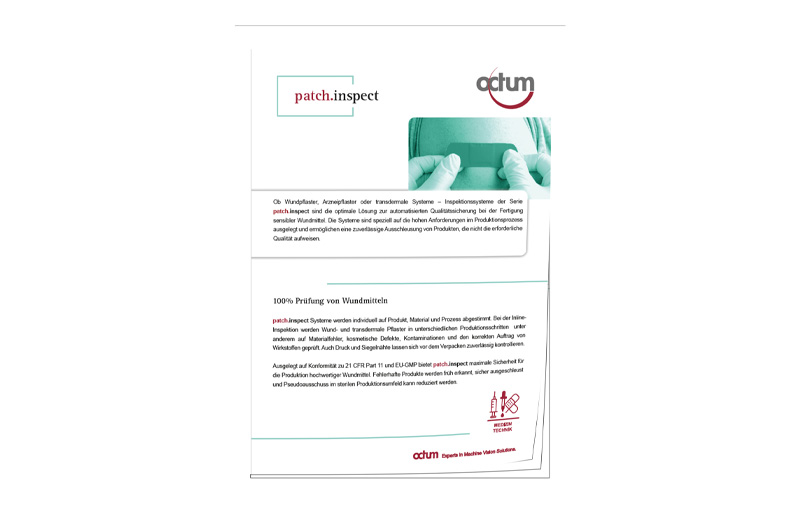
Download brochure
patch.inspect
Additional information
>> Industrial machine vision for demanding inspection tasks
>> AOI systems for reliable in-line quality control
>> System integration for machine vision
>> Feasibility study for machine vision and AOI
>> pharma.regulations
>> Medical technology
>> syringe.inspect – Inspection System for Syringes
>> pipette.inspect – Inspection Systems for Pipette Tips
>> well.inspect – Inspection Systems for Wells and Trays
Request an Inspection Solution for Wound Care Products and Bandages
Would you like to automatically inspect adhesive bandages, wound dressings, medicated patches, or transdermal systems? Talk to OCTUM about product design, materials, inspection criteria, web processing, machine cycle time, installation requirements, data integration, and requirements for documentation or measurement system capability.